

Why Do Some Cats Actually Like Water? Decoding Feline Hydration Quirks
Here's a truth bomb most cat owners won't believe: a cat's aversion to water isn't universal. We assume they are like furry little vampires that burst into flames when exposed to H20. Actually, some breeds actively seek out water, turning the typical feline stereotype on its head. So, what makes these aquatic kitties so different?
For Busy Owners: While most cats avoid water due to their evolutionary history as desert dwellers and the discomfort of a wet coat, some cats enjoy playing in or even swimming in water. This behavior can be influenced by breed, early exposure, and positive experiences. Providing water fountains or toys can encourage a cat’s natural curiosity about water.
Why Does My Cat Love Water? The Evolutionary and Genetic Factors
It's rarer than hen's teeth, but some cats genuinely enjoy a splash. The prevailing wisdom is that cats evolved in arid climates, so they didn't exactly need swimming lessons. However, genetics and early experiences can override this. Think about it: breeds like Turkish Vans have a natural affinity for water, likely due to genetic mutations affecting their coat's water resistance. This is related to the expression of genes influencing the production of sebum, an oily substance that waterproofs fur. In breeds averse to water, immersion can cause rapid heat loss via conduction. This triggers a stress response mediated by the hypothalamic-pituitary-adrenal (HPA) axis, reinforcing avoidance behavior.
The Clinical Perspective: Evolutionarily, cats weren't selected for swimming prowess. Their fur lacks the insulating undercoat found in aquatic mammals. A soaked cat is a cold cat, and a cold cat is a grumpy cat. The discomfort of a heavy, wet coat combined with the loss of their own scent (more on that later) makes water an unpleasant experience for most felines.
Home-Care Hack: Don't force the issue! Start slow. Leave a shallow dish of water in the sink and let your cat investigate. Try a slow drip from the faucet. The goal is curiosity, not coercion.
Red Flag Checklist: If your cat shows signs of distress around water (hiding, hissing, attempts to flee), back off. Forcing water exposure can create lasting fear and anxiety.
Are Certain Cat Breeds More Prone to Enjoying Water Play?
The feline gene pool is diverse, and some breeds are simply more open to aquatic adventures. Breeds such as Turkish Vans and Maine Coons are known for their higher tolerance, and sometimes outright love, for water. This is often linked to their coat structure and historical roles. The Turkish Van, for instance, developed in the Lake Van region of Turkey, where swimming was likely part of their daily life. The Maine Coon, a large breed from the northeastern United States, has a water-resistant coat that may have helped them survive in harsh winter climates. The increased water tolerance may also be related to differences in their sensory receptors. For example, some breeds may have fewer cold receptors in their skin, making the sensation of wetness less unpleasant. As I tell my clients, anecdotal observations suggest that early handling and socialization play a crucial role.
The Clinical Perspective: Breed predispositions are real, but they aren't destiny. Even within water-loving breeds, individual preferences vary wildly. Think of it like human height: genetics set the potential, but nutrition and environment determine the outcome.
Home-Care Hack: If you have one of these breeds, consider a cat water fountain. The moving water mimics a natural stream and can pique their interest.
Red Flag Checklist: Just because your cat is a Maine Coon doesn't mean they'll automatically enjoy swimming. Watch for signs of stress and respect their boundaries.
How Does Early Exposure Affect a Cat's View on Water?
Early experiences are mission-critical when shaping a cat's perception of water. Kittens exposed to water in a positive, controlled manner are far more likely to tolerate, or even enjoy, aquatic activities later in life. This is all about neural plasticity. During kittenhood, the brain is highly adaptable. Positive associations with water early on can hardwire a sense of safety and even pleasure. This contrasts sharply with cats who have traumatic experiences with water, such as forced baths or accidental falls into pools. Such events can create a lifelong aversion, driven by the amygdala, the brain's fear center. This is why show cats, who are bathed regularly from a young age, often exhibit a higher tolerance for water.
The Clinical Perspective: The "critical period" for socialization is key. Introducing kittens to water gradually and gently before 16 weeks of age can significantly reduce their likelihood of developing aquaphobia.
Home-Care Hack: Start with damp cloths instead of full baths. Gently wipe your kitten down, praising and rewarding them. Gradually introduce shallow water play in a sink or tub.
Red Flag Checklist: Never leave a kitten unattended near water. Drowning is a real risk. Always supervise water play and ensure a safe escape route.
Why Does My Cat Dip Her Paw in Water? Understanding Feline Curiosity
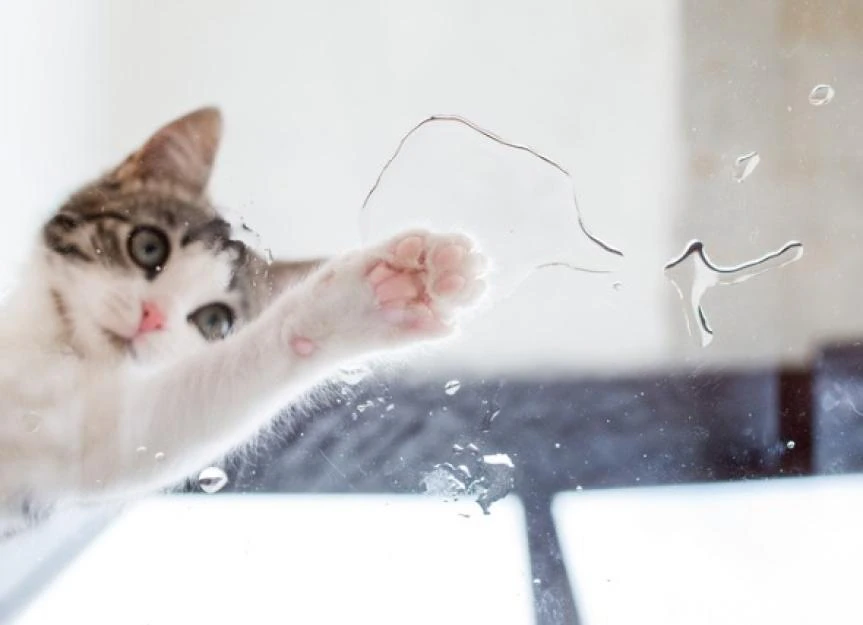
That dainty paw-dipping behavior isn't just cute; it's a window into the feline mind. Cats are naturally curious creatures, and water, with its reflective surface and fluid dynamics, is endlessly fascinating. The paw-dipping allows them to test the water's temperature, depth, and texture without fully committing. It's a sensory exploration. Furthermore, the movement of the water creates visual stimulation. The light reflecting off the surface, the ripples and waves, all trigger their hunting instincts. They see it as a form of play, a way to interact with their environment. Honestly, it's like a tiny scientist conducting experiments.
The Clinical Perspective: This behavior is often linked to a cat's predatory drive. They're mimicking the act of fishing, testing the waters before "striking" at a potential prey.
Home-Care Hack: Provide a dedicated water bowl for paw-dipping. A wide, shallow bowl is ideal. Place it on a waterproof mat to minimize mess.
Red Flag Checklist: If your cat is obsessively pawing at the water, to the point of neglecting other activities, it could be a sign of anxiety or compulsive behavior. Consult with your veterinarian.
What's the Deal with Cats Grooming After Water Exposure?
A cat's post-water grooming ritual isn't just about drying off; it's about reclaiming their identity. A cat's scent is a crucial part of their self-identification and communication. They deposit pheromones through saliva and sebaceous glands, marking their territory and signaling their presence to other cats. Water washes away these scents, leaving them feeling vulnerable and disoriented. The grooming process is how they re-establish their olfactory signature, restoring their sense of security. The scent glands are located near the mouth, cheeks, and paws, and when cats groom, they are reapplying these scents to their fur. This behavior is also influenced by the cat's vomeronasal organ, or Jacobson's organ, located in the roof of their mouth, which helps them detect pheromones and other chemical signals.
The Clinical Perspective: Grooming also helps to redistribute oils in the fur, providing insulation and waterproofing. It's a vital part of maintaining coat health.
Home-Care Hack: Provide a soft, absorbent towel after water exposure. This will help speed up the drying process and minimize the need for excessive grooming.
Red Flag Checklist: Excessive grooming after water exposure can lead to skin irritation and hair loss. If you notice bald patches or inflamed skin, consult with your veterinarian.