

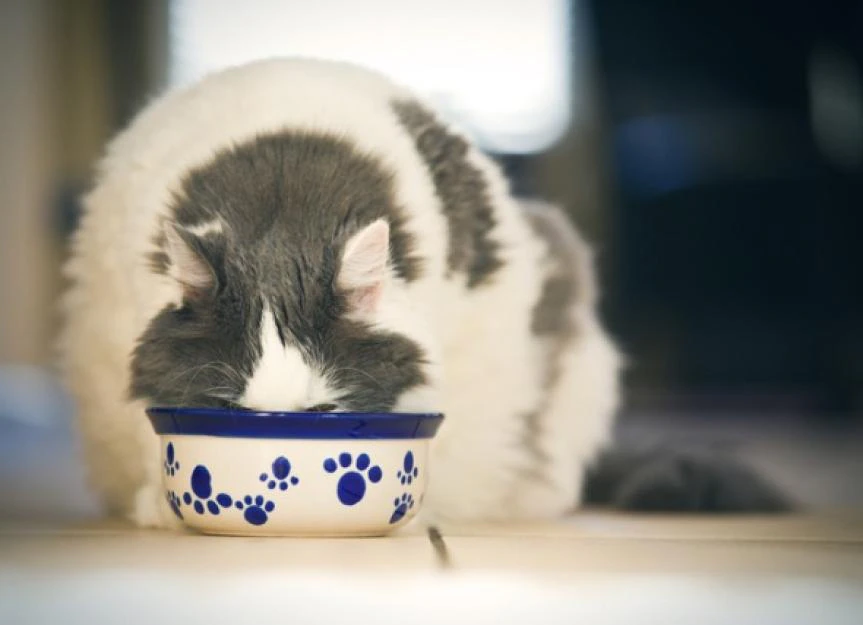
Why Is My Cat Eating Too Fast? Proven Solutions for Regurgitation
Here's a counter-intuitive fact I share with clients all the time in the exam room: cats who eat too fast aren't necessarily greedy; they're often anxious. It's a survival mechanism, a throwback to times when food was scarce and competition was fierce. Understanding this anxiety is the first step to solving the problem.
Busy Owners: If your cat gulps food and then throws it up, you're likely dealing with rapid eating. Simple solutions like spreading food on a flat surface or using slow-feeder bowls can make a huge difference. If the problem persists or your cat shows other signs of illness, a vet visit is crucial.
Why Is My Cat Suddenly Eating So Fast and Throwing Up? The Clinical Perspective
When a cat eats too quickly, especially dry kibble, it's not just about bad manners. The rapid ingestion leads to a cascade of physiological events. The dry food absorbs water in the stomach, expanding rapidly. This distention triggers stretch receptors in the stomach wall, which then send signals to the brainstem. The brainstem, interpreting this as overeating, initiates the regurgitation reflex to relieve the pressure. This is further compounded if the cat has underlying anxiety, leading to increased cortisol levels, which can disrupt normal digestive motility and exacerbate the issue.
What's the Difference Between Regurgitation and Vomiting in Cats?
Regurgitation and vomiting, while both involving expulsion of stomach contents, are distinct processes. Regurgitation is a passive process. The undigested food is expelled with minimal abdominal effort, often appearing shortly after eating and retaining its original shape. Vomiting, on the other hand, is an active process involving forceful contractions of the abdominal muscles. The vomitus is partially digested and may contain bile. Vomiting often indicates a more serious underlying issue such as inflammation, infection, or even a blockage. It is mission-critical to differentiate between the two because while regurgitation due to rapid eating is often benign, vomiting always warrants veterinary attention.
What Are the Potential Health Problems Associated With a Cat Eating Too Fast?
While occasional regurgitation due to rapid eating might seem harmless, chronic episodes can lead to several health problems. Firstly, the constant irritation of the esophagus from repeated regurgitation can lead to esophagitis, an inflammation of the esophageal lining. This can cause discomfort and even make swallowing painful, potentially leading to decreased appetite and weight loss. Secondly, the cat may not be absorbing all the nutrients from their food if it is consistently regurgitated. This is especially concerning for kittens or cats with underlying health conditions. Thirdly, in rare cases, forceful regurgitation can lead to aspiration pneumonia, where food particles enter the lungs, causing a severe and potentially life-threatening infection.
How Can I Slow Down My Cat's Eating Habits? Home-Care Hacks
Honestly, you don't need fancy gadgets to slow down a fast-eating cat. Here are some practical, low-cost home-care hacks that I tell my own clients:
- The Baking Pan Method: Spread your cat's food across a large, flat baking sheet. This forces them to eat one kibble at a time, naturally slowing their pace.
- Obstacle Course: Place a large, non-swallowable object (like a golf ball or large rock) in their bowl. They'll have to eat around it, slowing them down.
- Elevated Feeding: Raise the food bowl. This can help with swallowing and reduce the likelihood of regurgitation, especially in cats with megaesophagus (an enlarged esophagus).
Are There Special Slow Feeder Cat Bowls That Can Help?
Yes, there are commercially available slow-feeder bowls designed with built-in obstacles or maze-like structures. These bowls force the cat to work for their food, significantly slowing down their eating speed. The designs vary, with some featuring raised patterns, while others have multiple compartments or tunnels. The goal is the same: to make it more challenging for the cat to access the food, thereby extending mealtime and reducing the risk of regurgitation. In the exam room, I often recommend starting with a simple design and then progressing to more complex ones if needed.
Are Automatic Cat Feeders a Good Solution for Fast Eaters?
Automatic feeders can be helpful, but with caveats. The key is portion control. Feeders that dispense small, frequent meals throughout the day can prevent the stomach from becoming overloaded. However, be cautious of free-feeding automatic feeders, as they can exacerbate the problem if the cat still has unlimited access to food. It's mission-critical to monitor your cat's overall intake and adjust portion sizes accordingly. Also, ensure the feeder is easy to clean to prevent bacterial contamination, which can lead to other digestive issues.
What About Cat Treat Toys and Interactive Feeders?
Cat treat toys and interactive feeders are excellent tools for both slowing down eating and providing mental stimulation. These toys require the cat to manipulate them in order to release food, turning mealtime into a game. This not only slows down the eating process but also engages their natural hunting instincts, reducing boredom and anxiety. The increased activity can also help with weight management, which is an added bonus. I often recommend these to clients who have indoor cats, as they provide a much-needed source of enrichment.
What Are the Red Flags? When Is Fast Eating a Symptom of a Bigger Problem?
While fast eating is often a behavioral issue, it can sometimes be a symptom of an underlying medical condition. Here's a red-flag checklist:
- Weight Loss: If your cat is eating voraciously but still losing weight, this could indicate a malabsorption issue or a parasitic infection.
- Increased Thirst: Excessive thirst coupled with rapid eating can be a sign of diabetes or hyperthyroidism.
- Changes in Stool: Diarrhea or constipation can indicate a digestive problem that needs veterinary attention.
- Lethargy: If your cat is unusually tired or withdrawn, this could indicate a systemic illness.
- Frequent Vomiting (not just regurgitation): This is a non-negotiable reason to see a vet.
The Clinical Perspective: Underlying Anxiety and Its Role
As I mentioned earlier, anxiety is often a major driver of rapid eating in cats. Cats are creatures of habit, and any disruption to their routine can trigger anxiety. This could be anything from a new pet in the household to a change in their feeding schedule. The anxiety then manifests as increased appetite and rapid eating. From a clinical standpoint, addressing the underlying anxiety is just as mission-critical as slowing down their eating. This may involve environmental enrichment, pheromone therapy (like Feliway), or, in severe cases, anti-anxiety medication. It's a holistic approach that considers both the physical and emotional well-being of the cat.