

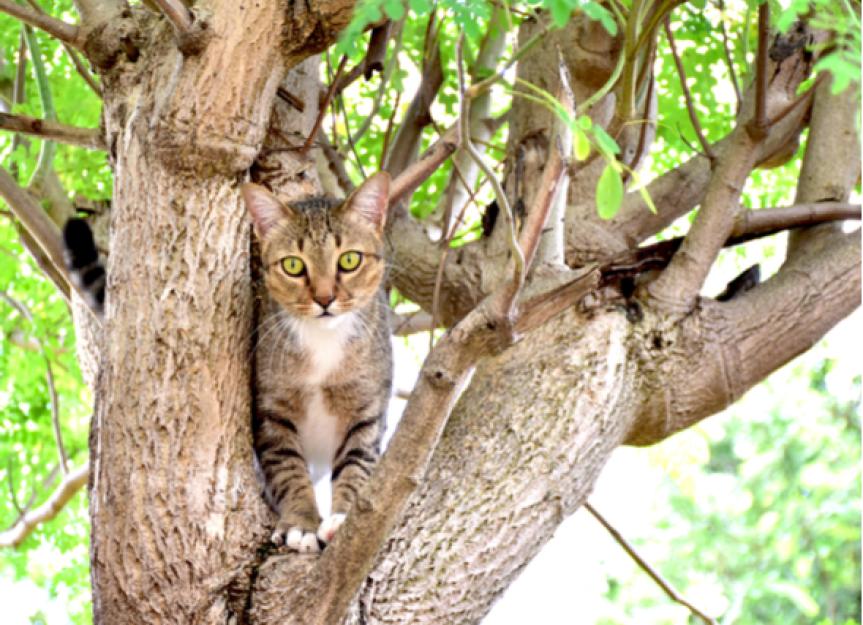
Why is My Cat Stuck in a Tree? Understanding Feline Arboreal Adventures (and Misadventures)
Here's a weird fact they don't tell you at the adoption center: cats aren't *necessarily* built for climbing *down*. Their claws, perfect for ascending, become a liability on the descent. It's like giving someone hiking boots and then asking them to ice skate. Many cats lack the biomechanical skills and spatial reasoning to coordinate a safe retreat from their elevated perches.
Busy Owner Summary: Cats climb trees for fun, hunting, or escape. Getting down is harder due to claw structure and coordination. Try luring with food, creating a ramp, or calling animal rescue if needed. Stay calm!
Why Do Cats Climb Trees? Understanding Feline Motivation
Cats climb trees for a variety of reasons, often linked to their instincts as both predators and prey. They may be hunting, escaping danger, or simply exploring their environment. Understanding this motivation is the first step in figuring out how to get them *un*stuck.
From a behavioral perspective, cats occupy a unique space. They're predators of mice and birds, but also vulnerable to larger animals like coyotes or even aggressive dogs. This duality drives them to seek elevated positions. They might chase a squirrel up a tree without fully considering the descent. Alternatively, if spooked by a loud noise or another animal, a cat will instinctively bolt upwards for safety. The height provides a vantage point to assess threats. What I tell my clients is that a tree is like a feline security blanket.
Why is Getting Down So Difficult? The Physics of Feline Descent
Climbing *up* is easy for cats. Their curved, retractable claws act like tiny grappling hooks, providing excellent grip on bark and other rough surfaces. Descending, however, requires a completely different set of skills. Their claws now point the wrong way, making it difficult to maintain a secure hold.
Here’s the deal: a cat’s anatomy is geared towards ascending. Their shoulder and hip joints allow for powerful upward movement, but they lack the flexibility and muscle strength needed for controlled downward climbing. Imagine trying to climb down a ladder facing outwards – that’s essentially what a cat is attempting. When a cat tries to climb down, they have trouble coordinating their front and hind feet. It’s an unnatural movement for them. They are more likely to jump down from heights that they can manage.
Think about it. When a cat climbs onto a sofa, does it carefully climb down? No. It jumps. Up in a tree, that jump might be too far. That height becomes a non-negotiable barrier. This is especially true for indoor cats that lack experience with climbing and descending from trees. In the exam room, I often see declawed cats in this predicament. Declawing removes their primary climbing tools, making descent nearly impossible. They can still manage to ascend using residual claw fragments and sheer determination, but coming down is a different story. It's a welfare issue, honestly.
Is My Cat *Really* Stuck? Assessing the Situation
Sometimes, a cat isn't truly *stuck*, but rather hesitant to come down due to fear or anxiety. Before attempting a rescue, it's crucial to assess the cat's behavior and the surrounding environment. Is the cat panicked, or simply perched comfortably? Is there anything that might be scaring it?
A cat's emotional state plays a mission-critical role. If something chased the cat up the tree, it may be too scared to climb or jump down. Indoor cats, especially if they’re not used to being outside, may also be overwhelmed by the unfamiliar environment. What I tell my own clients is, patience is key. Cats are creatures of habit, and they may simply need time to adjust and feel safe enough to descend. Also, remember that cats are excellent at hiding pain. If your cat seems unusually hesitant, consider the possibility of an underlying injury that's making it difficult to move.
Home-Care Hacks: Simple Strategies to Entice Your Cat Down
Before resorting to more drastic measures, try these simple home-care hacks to coax your cat down from the tree. These methods focus on creating a safe and appealing environment that encourages the cat to descend on its own.
- Lure with Food: This is the first and often most effective strategy. Use a favorite treat or some warmed-up wet food to entice your cat. The aroma of warmed food travels further, making it even more appealing.
- Create a Ramp: If possible, lean a sturdy board against the tree to create a makeshift ramp. This provides an easy and safe route down. Make sure the board is stable and secure before allowing the cat to use it.
- Remove the Threat: If the cat is scared by something (another animal, a loud noise), try to remove the source of the fear. This may involve bringing other pets indoors or asking neighbors to keep their dogs away from the area.
- Stay Calm: Cats are sensitive to human emotions. If you're panicked or agitated, the cat will likely sense this and become even more fearful. Speak in a calm, reassuring voice and avoid making sudden movements.
When to Call for Backup: The Red Flag Checklist
While many cats will eventually come down on their own, there are situations where professional help is needed. This checklist outlines the red flags that indicate it's time to call for backup.
- Prolonged Time: If the cat has been stuck in the tree for more than 24 hours, it's time to seek assistance. Dehydration and exhaustion can become serious concerns.
- Visible Injury: If the cat is visibly injured (limping, bleeding), do not attempt to rescue it yourself. Contact animal control or a professional tree service.
- Panicked Behavior: If the cat is extremely agitated or showing signs of distress (excessive vocalization, frantic movements), it's best to let professionals handle the situation.
- Inaccessible Location: If the cat is too high up or in a difficult-to-reach location, attempting a rescue yourself could be dangerous.
- Your Own Safety: Never put your own safety at risk to rescue a cat. If you're not comfortable climbing a ladder or reaching the cat safely, call for help.
Who to Call? Finding the Right Rescue Resources
If you've determined that professional help is needed, here are some resources to contact:
- Local Animal Shelter or Rescue: These organizations often have experience with rescuing cats from trees and may have specialized equipment.
- Fire Department: While not always the first choice, the fire department may be able to assist in certain situations, especially if the cat is in immediate danger.
- Professional Tree Service: Some tree service companies offer cat rescue services. They have the equipment and expertise to safely reach cats in high places.
- Animal Control: Animal control officers can assess the situation and provide guidance or assistance.