

Is Your Dog a Runner? Expert Vet Guide to Off-Leash Freedom
Here's a counter-intuitive fact I tell clients in the exam room: sometimes, the more freedom you *appear* to give your dog, the tighter your bond actually becomes. It's not about control; it's about trust. Many owners mistakenly believe that a long walk means freedom for the dog, but for many dogs, it means running away. This article will show you how to train your dog to walk unleashed.
For Busy Owners: Training your dog for off-leash walking centers on trust and consistent reinforcement. Start with on-leash obedience and gradually introduce off-leash practice in safe, controlled environments. An emergency recall cue, paired with high-value rewards, can be a lifesaver.
Why Does My Dog Run Away When Off-Leash? Understanding Canine Wanderlust
The primary reason dogs run off-leash is either a lack of training or a stronger motivation to explore than to stay. Dogs are driven by instinct, and those instincts can easily override any training if not properly addressed. This behavior is influenced by breed, age, and individual personality. Understanding the underlying biological drives is mission-critical for effective training.
The Clinical Perspective: A dog's propensity to wander is often linked to their dopamine and norepinephrine pathways. High prey drive breeds (like many terriers) experience a surge of dopamine when they spot potential prey, making the chase incredibly rewarding. Neutering or spaying can reduce mate-seeking behaviors driven by hormonal fluctuations. Fear responses trigger the release of cortisol and adrenaline, prompting a "flight" response.
Common reasons dogs might bolt when off-leash include:
- High prey drive: The thrill of the chase is biologically ingrained.
- Curiosity: Young dogs especially are driven to explore new environments.
- Mate-seeking: Unspayed/unneutered dogs follow hormonal urges.
- Fear: Loud noises or unfamiliar situations trigger a flight response.
5 Vet-Approved Tips: How to Train Your Dog Not to Run Away When Off-Leash
The core principle is to make staying with you more rewarding than any potential distraction. This involves building a strong bond, establishing clear communication, and consistently reinforcing desired behaviors. It's about creating a positive association with being near you, so your dog *chooses* to stay close.
1. Why is On-Leash Walking so Important for Off-Leash Freedom?
On-leash walking isn't just about physical exercise; it's the bedrock of communication and control. It establishes you as the leader and teaches your dog to pay attention to your cues. Seriously, don't skip this step. A dog that pulls and ignores you on-leash is almost guaranteed to do the same off-leash.
The Clinical Perspective: Leash training taps into the dog's pack mentality. By consistently guiding their movement and rewarding attention, you reinforce your role as the leader. This creates a neurological pathway where following your lead becomes a default behavior. Furthermore, controlled on-leash exposure to potential triggers (like squirrels) allows for desensitization and counter-conditioning.
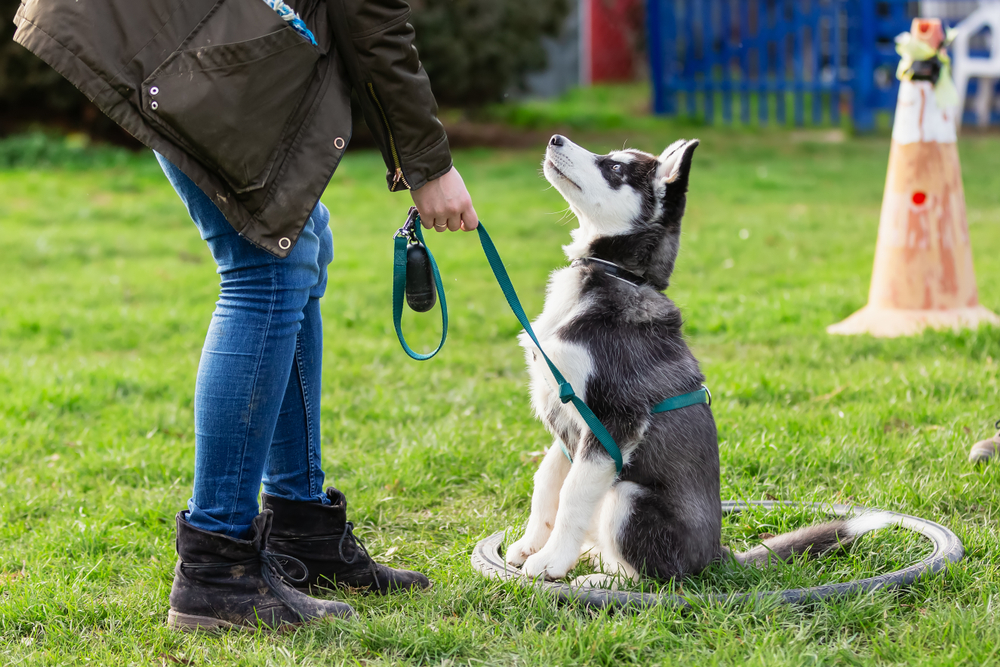
Home-Care Hacks: Use a front-clip harness to discourage pulling. Practice short, frequent sessions (5-10 minutes) to maintain focus. Reward eye contact and loose-leash walking with high-value treats. Change direction frequently to keep your dog engaged.
2. How Can Basic Obedience Training Prevent Run-Away Behavior?
Obedience training provides a structured framework for communication and control. Commands like "sit," "stay," and "come" are not just tricks; they are tools for managing your dog's behavior in various situations. A well-trained dog is a safer dog.
The Clinical Perspective: Obedience training stimulates the prefrontal cortex, the area of the brain responsible for decision-making and impulse control. Consistent training strengthens these neural pathways, making it easier for your dog to resist the urge to chase or bolt. Furthermore, the positive reinforcement used in training releases endorphins, creating a positive association with obedience.
Home-Care Hacks: Use positive reinforcement (treats, praise, toys) exclusively. Keep training sessions short and fun. Gradually increase the difficulty and distractions. Practice in different environments to generalize the behavior.
3. Mastering the Recall: The Cornerstone of Off-Leash Safety
Recall, or teaching your dog to reliably come when called, is arguably the most mission-critical skill for off-leash safety. It's your lifeline when distractions arise. Without a rock-solid recall, you're playing a dangerous game.
The Clinical Perspective: Effective recall training creates a strong conditioned response. The "come" command becomes directly linked to a positive reward in the dog's brain. This association overrides other competing stimuli, such as the desire to chase a squirrel. Consistency and positive reinforcement are key to strengthening this neurological connection.
Home-Care Hacks: Start training in a quiet, enclosed space. Use a high-value treat that your dog *loves*. Say the command ("Come!") in a happy, encouraging tone. Reward immediately and enthusiastically when your dog arrives. Gradually increase the distance and distractions.
4. Emergency Recall: When Speed and Reliability Are Non-Negotiable
An emergency recall is a separate, highly specialized command reserved for life-threatening situations. This isn't your everyday "come;" this is the command you use when your dog is running towards traffic or disappearing into the woods. It needs to be lightning-fast and 100% reliable.
The Clinical Perspective: The emergency recall relies on a principle called "super-conditioning." By pairing a unique cue with an *extremely* high-value reward, you create an almost Pavlovian response. The dog is so motivated by the anticipated reward that they instantly override any other behavior.
Home-Care Hacks: Choose a unique cue word (e.g., "Rocket!"). Use a reward your dog goes bonkers for (e.g., cooked steak). Practice infrequently (1-2 times per week) to maintain the cue's power. Only use it in true emergencies.
5. Avoiding Recall Poisoning: How NOT to Ruin Your Hard Work
Recall poisoning happens when you inadvertently create a negative association with the "come" command. This can occur if you use the recall to end fun activities (like playtime at the park) or to administer unpleasant treatments (like baths or nail trims). Honestly, it's a very common mistake I see in the exam room.
The Clinical Perspective: Recall poisoning disrupts the positive neurological pathways you've worked so hard to establish. The dog begins to associate the "come" command with negative experiences, leading to avoidance behavior. This can be incredibly difficult to undo.
Home-Care Hacks: Never use the recall to end fun activities. If you need to interrupt playtime, physically go to your dog instead of calling them. Avoid using the recall before administering unpleasant treatments. Instead, lure your dog with a treat or toy.
The Red Flag Checklist: When to Keep Your Dog on a Leash
Even with extensive training, certain situations warrant keeping your dog on a leash. These include:
- Unfamiliar environments: New places are full of novel stimuli that can trigger unwanted behaviors.
- High-traffic areas: The risk of accidents is simply too great.
- Areas with wildlife: A strong prey drive can override even the best training.
- When your dog is unwell: Illness can affect their focus and responsiveness.
Final Thoughts: Responsible Off-Leash Freedom
Off-leash walking is a fantastic goal, but it's not worth risking your dog's safety. Prioritize training, be aware of your dog's limitations, and always err on the side of caution. A responsible owner is an informed owner.