

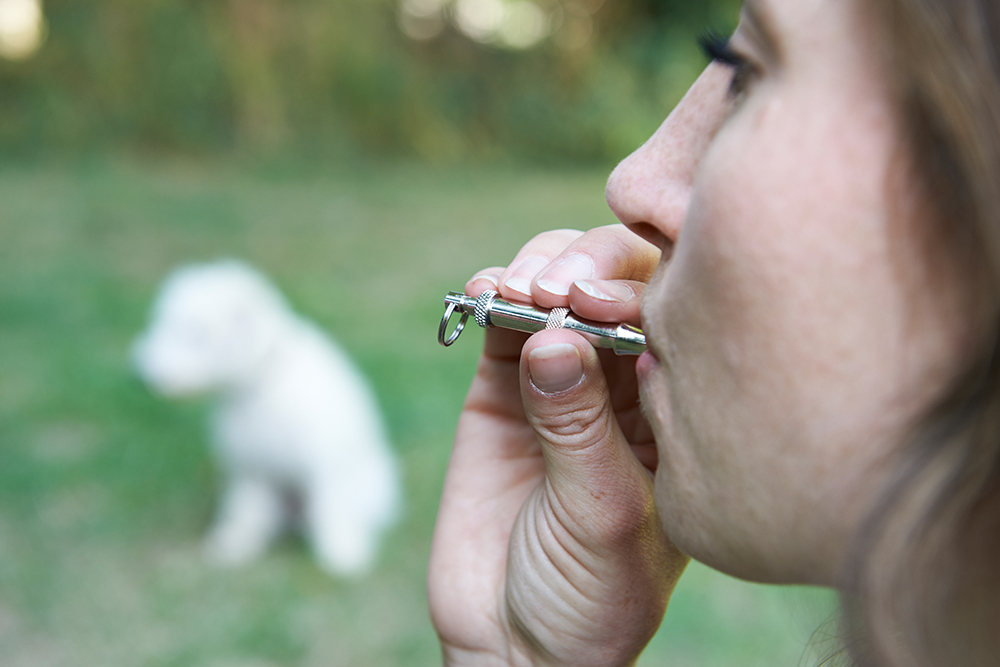
Dog Whistles: The Vet's Guide to Training, Types & Safe Use
Here's a counter-intuitive fact I tell clients in the exam room all the time: that "silent" dog whistle? It's not actually silent. Humans just can't hear it. The high-frequency sound is why it works so well, but also why it can be misused.
For busy owners: Dog whistles use frequencies dogs hear but humans don't, making training consistent. There are audible and "silent" (ultrasonic) types, each with pros and cons. Training is still crucial; the whistle isn't magic, just a clear signal.
How Do Dog Whistles Actually Work? The Science Explained
Dog whistles work by emitting high-frequency sounds that fall within a dog's superior hearing range. The average dog can detect sounds between 65 and 45,000 Hz, far exceeding the 20-20,000 Hz range of the average middle-aged human. These whistles typically operate around 35,000 Hz, a frequency we can't perceive but dogs can easily hear.
Think of it like this: your dog's ear is like a finely tuned radio receiver, and a dog whistle is a specific frequency transmitter. This high-frequency sound bypasses the usual cacophony of human-generated noise, grabbing your dog's attention. The biological reason dogs hear higher frequencies better comes down to the structure of their inner ear (the cochlea) being more sensitive to those ranges. Like any training tool, the whistle's effectiveness hinges on creating an association between the sound and a desired behavior. It's not magic; it's classical (Pavlovian) conditioning at its finest.
The Clinical Perspective (Biological 'Why')
From a clinical perspective, the consistent frequency of a dog whistle offers a significant advantage over voice commands. Our voices fluctuate with emotion, fatigue, and even the common cold. A dog whistle, however, delivers the same signal every time. This consistency reduces ambiguity for the dog, speeding up the learning process. This is especially useful for working breeds like border collies, where clear commands are mission-critical for herding behavior.
Home-Care Hacks (Low-cost, Practical Tips)
- Start Young: Begin whistle training when your dog is a puppy to establish a strong association early on.
- Positive Reinforcement: Always pair the whistle with positive reinforcement, like treats or praise.
- Short Sessions: Keep training sessions short and engaging to maintain your dog's focus.
The Red Flag Checklist (When to Panic vs. When to Wait)
- No Response: If your dog consistently ignores the whistle, consult with a professional trainer.
- Fearful Reaction: If your dog shows signs of fear or anxiety, discontinue use immediately.
- Sudden Hearing Loss: If you suspect hearing loss, consult with your veterinarian.
What Are the Different Types of Dog Whistles? Audible vs. Silent Explained
Dog whistles come in two primary flavors: audible and so-called "silent" (ultrasonic) whistles. Audible whistles produce a sound that humans can hear, similar to a referee's whistle at a sports event. Silent whistles, on the other hand, emit ultrasonic frequencies beyond the range of human hearing, though some people may perceive a faint hiss.
Audible whistles are straightforward. They're easy to use and provide immediate feedback since you can hear the sound yourself. However, they can be disruptive in quiet environments and may not be ideal for close-quarters training. Silent whistles, also known as Galton's whistles (after the inventor), offer a more discreet option. They allow you to communicate with your dog without disturbing neighbors or attracting unwanted attention. Keep in mind that the term "silent" is misleading; your dog hears it loud and clear.
The Clinical Perspective (Biological 'Why')
The choice between audible and silent whistles often depends on the training environment and the dog's temperament. Some dogs respond better to the distinct sound of an audible whistle, while others are more sensitive to the ultrasonic frequencies of a silent whistle. What I tell my own clients is to consider your dog's breed. High-strung breeds like German Shepherds may respond better to ultrasonic whistles due to their enhanced hearing. It's all about finding what works best for your individual dog.
Home-Care Hacks (Low-cost, Practical Tips)
- Experiment: Try both types of whistles to see which one your dog responds to best.
- Adjustable Frequency: Opt for a silent whistle with adjustable frequency to fine-tune the sound to your dog's hearing range.
- Consistency: Stick with one type of whistle once you've found the one that works best for your dog.
The Red Flag Checklist (When to Panic vs. When to Wait)
- Aggression: If the whistle triggers aggression, stop using it and consult with a behaviorist.
- Disorientation: If your dog seems disoriented after hearing the whistle, switch to a lower frequency or a different type of whistle.
- Apathy: If your dog is completely indifferent to both types of whistles, consider other training methods.
What Are the Advantages of Dog Whistle Training? Why Choose this Method?
Dog whistles offer several advantages over traditional voice commands. The sound of a whistle can cut through background noise, wind, and urban clamor more effectively than the human voice. Dogs can hear whistle frequencies over much greater distances, making it ideal for off-leash training. Whistle training removes the emotional variability inherent in voice commands. Your whistle delivers the same consistent signal regardless of your mood.
From a training perspective, a dog whistle provides a clear and unambiguous signal that minimizes confusion for the dog. The consistent frequency eliminates the potential for misinterpretation that can arise from variations in tone, pitch, or volume of the human voice. This is particularly useful in situations where distractions are high, such as dog parks or crowded streets. Think of it as sending a focused beam of sound directly to your dog's ears, bypassing the noise and chatter of the environment.
The Clinical Perspective (Biological 'Why')
The ability of dogs to hear high-frequency sounds relates to their evolutionary history as predators. Detecting the faint sounds of prey animals, such as rodents, requires acute hearing in the ultrasonic range. The dog whistle exploits this biological adaptation, allowing us to communicate with our canine companions in a way that resonates with their natural instincts.
Home-Care Hacks (Low-cost, Practical Tips)
- Distance Training: Use the whistle to practice recall from increasing distances.
- Emergency Recall: Designate a specific whistle command for emergency recall situations.
- Combine with Hand Signals: Pair whistle commands with hand signals for added clarity.
The Red Flag Checklist (When to Panic vs. When to Wait)
- Ignoring Commands: If your dog ignores commands despite consistent training, seek professional guidance.
- Inconsistent Response: If your dog's response to the whistle is inconsistent, re-evaluate your training technique.
- Environmental Factors: Be aware that environmental factors, such as wind or dense foliage, can affect the whistle's effectiveness.
What Are the Disadvantages of Dog Whistle Training? Potential Drawbacks
While dog whistles are powerful training tools, they have a few potential drawbacks. Adjustable silent whistles require careful calibration to find the optimal frequency for your dog, which can take time and patience. The term "silent" is misleading; the sound can be irritating or even harmful if blown too close to your dog's ears. Honestly, I see dogs in the clinic all the time that have noise-induced hearing loss.
The biggest risk I see is over-reliance. Some owners assume the whistle is a magic bullet, neglecting the need for consistent training and positive reinforcement. The whistle is merely a tool, not a substitute for building a strong bond with your dog. Also, consider the social implications. Using a dog whistle in public can be disruptive to others, especially if they can hear the ultrasonic frequencies. Be mindful of your surroundings and use the whistle responsibly.
The Clinical Perspective (Biological 'Why')
From a veterinary standpoint, the primary concern with dog whistles is the potential for noise-induced hearing loss. Prolonged exposure to high-frequency sounds can damage the delicate hair cells in the inner ear, leading to irreversible hearing impairment. This is especially true for older dogs or those with pre-existing hearing sensitivities.
Home-Care Hacks (Low-cost, Practical Tips)
- Proper Usage: Always use the whistle at a safe distance from your dog's ears.
- Limited Exposure: Keep whistle training sessions short and infrequent.
- Monitor Your Dog: Watch for signs of discomfort or distress, such as head shaking or ear scratching.
The Red Flag Checklist (When to Panic vs. When to Wait)
- Hearing Loss Signs: If you notice signs of hearing loss, such as decreased responsiveness to sounds, consult with your veterinarian.
- Behavioral Changes: If your dog's behavior changes after whistle training, such as increased anxiety or aggression, discontinue use.
- Legal Restrictions: Be aware of any local ordinances or regulations regarding the use of dog whistles in public areas.
Frequently Asked Questions (FAQ)
How do I find the right frequency for my dog's hearing?
The easiest way to find the perfect silent whistle frequency for your pup is to use the “wake-up” test. Blow the whistle when your dog is asleep. Slowly begin adjusting the frequency until the sound awakens your dog. You can also find the appropriate frequency while your dog is awake using the same method. Adjust it very slowly until you find the sweet spot that causes your pup’s ears to twitch.
Will a dog whistle prevent my dog from barking excessively?
This is a myth. The available research doesn’t suggest that whistles can terminate inappropriate behaviors like problem barking or fighting. However, the exception to this rule is if your dog has come to associate the frequencies emitted by the whistle with rewards or punishment. In some cases, using the whistle to prevent problematic behaviors backfires on the owner as the sound produced can be irritating and may provoke the dog to act out.
Do whistles hurt dogs’ ears or cause hearing damage?
Used appropriately, the sound of a dog whistle will not harm your dog’s ears. Ensure you’ve read the manufacturer information and manual carefully before beginning whistle training.
Conclusion
Dog whistles can be very useful training tools, provided they’re used correctly. However, they only provide a consistent “command” that your dog needs to be trained to respond to. With correct training, on the whole, whistles are effective. As with other training methodologies, you cannot expect your dog to understand what you’re trying to teach them without creating the necessary association with the whistle noise. Whistles are not magic tools or instant fixes. Whistle training does take some time and patience, but the result will be more than worth the effort.