

Decoding the 'Guilty Dog' Look: Understanding Canine Behavior & Emotions
Here's a counter-intuitive fact I tell new dog owners in the exam room all the time: that 'guilty' look your dog gives you isn't guilt at all. It's a learned response, a survival mechanism honed over millennia. Dogs are masters at reading our micro-expressions. They know when we're displeased long before we utter a word.
For Busy Owners: Dogs don't experience guilt like humans do. That 'guilty' look is a reaction to your tone and body language. Focus on positive reinforcement to shape desired behaviors, rather than relying on scolding.
Do Dogs Feel Guilty? The Truth About Canine Emotions
The guilty look in dogs isn't actually guilt, but rather a response to your behavior. Studies show dogs display these behaviors when scolded, regardless of whether they actually committed a misdeed. This stems from their highly attuned ability to read human emotions, a crucial survival skill developed over generations of domestication where social cohesion with humans offers safety and resources. The underlying biology is rooted in heightened sensitivity to human pheromones and micro-expressions.
Why Does My Dog Look Guilty? Decoding Appeasement Signals
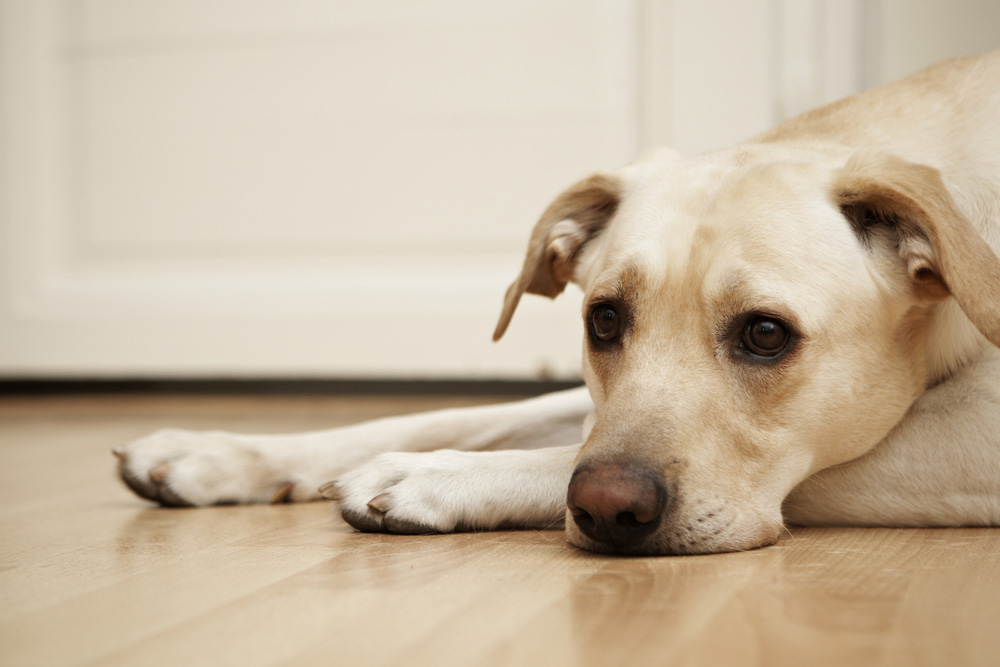
That classic 'guilty' posture – head lowered, tail tucked, avoiding eye contact – isn't an admission of wrongdoing, but a display of appeasement. It's a survival strategy. A dog displays appeasement behaviors to de-escalate a perceived threat (you!). Biologically, this involves a cascade of hormonal responses, including increased cortisol (a stress hormone) and activation of the parasympathetic nervous system, leading to behaviors like lip-licking and yawning, designed to signal non-aggression. Think of it like a canine olive branch. It’s a non-negotiable point I discuss with all my clients.
The Clinical Perspective: Understanding Stress Signals
As a vet, I see this all the time. A dog comes in, seemingly 'guilty' about something, but what I'm really seeing is a stressed animal. The key is to differentiate between true emotional states and learned behaviors. For example, a dog that's been repeatedly scolded for chewing might exhibit 'guilty' behaviors even when presented with a new chew toy. This isn’t guilt; it’s conditioned anxiety. From a biological standpoint, chronic stress can lead to elevated cortisol levels, which, over time, can suppress the immune system and increase susceptibility to illness. I always tell owners to watch for subtle signs like increased shedding, changes in appetite, or increased hiding behaviors.
Home-Care Hacks: Creating a Low-Stress Environment
Honestly, the best way to avoid the 'guilty' look is to minimize situations that trigger it. Focus on positive reinforcement training. Reward desired behaviors instead of punishing unwanted ones. Provide plenty of enrichment activities to reduce boredom and anxiety. Puzzle toys, interactive feeders, and regular exercise can work wonders. Also, consider using pheromone diffusers (like Adaptil) to create a calming environment. These diffusers mimic the natural pheromones released by nursing mothers, promoting a sense of security and well-being. I cannot stress this enough to my clients.
The Red Flag Checklist: When to Worry About Anxious Dog Behavior
While the 'guilty' look is usually harmless, sometimes it can be a sign of something more serious. If your dog is exhibiting excessive appeasement behaviors, such as constant lip-licking, hiding, or trembling, it's time to consult your veterinarian. These could be signs of underlying anxiety, fear, or even a medical condition causing discomfort. Rule out potential medical causes like pain or cognitive dysfunction (doggy dementia). Sudden behavioral changes always warrant a vet visit.
Do Dogs Understand Right From Wrong? The Limits of Canine Cognition
Dogs understand consequences, not morality. They learn to associate certain actions with specific outcomes. If your dog consistently gets scolded for jumping on guests, they'll likely stop jumping when you're around. However, this isn't because they understand that jumping is inherently 'wrong,' but because they associate it with a negative reaction. Their cognitive abilities are roughly equivalent to a human toddler, lacking the capacity for abstract moral reasoning. The neurological basis for this lies in the underdeveloped prefrontal cortex, the brain region responsible for higher-level cognitive functions like planning, impulse control, and moral judgment.
My Dog Acts Guilty After I Get Home: Is it Separation Anxiety?
Destructive behavior upon your return often points to separation anxiety, not guilt. Dogs with separation anxiety experience intense distress when left alone, leading to behaviors like chewing, barking, or house soiling. This isn't done out of spite or a desire to 'get back' at you, but out of panic and fear. The biological basis for separation anxiety involves dysregulation of neurotransmitters like serotonin and dopamine, leading to heightened anxiety and impulsivity. I’ve seen so many cases of separation anxiety in the exam room that I’ve lost count.
Long-Tail Keyword: How to Treat Separation Anxiety in Dogs
Treating separation anxiety requires a multi-faceted approach. Consult your veterinarian to rule out any underlying medical conditions. Implement behavior modification techniques like desensitization and counter-conditioning. Gradually acclimate your dog to being alone by starting with short absences and gradually increasing the duration. Provide plenty of enrichment activities to keep your dog occupied while you're away. In some cases, medication may be necessary to manage anxiety levels. Honestly, consistency is mission-critical. What I tell my own clients is that it takes time and patience, but with the right approach, most dogs can overcome separation anxiety.
What To Do Instead of Scolding: Positive Reinforcement Strategies
Forget punishment. It's ineffective and can damage your relationship with your dog. Focus on positive reinforcement. Reward desired behaviors with treats, praise, or toys. This creates a positive association with those behaviors, making them more likely to be repeated. For example, if you want your dog to stop jumping on guests, reward them for sitting politely instead. The underlying principle is based on operant conditioning, where behaviors are shaped by their consequences. Positive reinforcement increases the likelihood of a behavior, while punishment decreases it.
Long-Tail Keyword: How to Stop Unwanted Dog Behaviors
Stopping unwanted behaviors requires identifying the underlying cause. Is your dog bored, anxious, or simply lacking training? Address the root cause, not just the symptom. Provide plenty of exercise, mental stimulation, and training. Use positive reinforcement to teach alternative behaviors. For example, if your dog is constantly barking, teach them a 'quiet' command and reward them for being silent. Consistency is key. Make sure everyone in the household is on board with the training plan. Here’s the deal: it’s all about setting your dog up for success by proactively managing their environment and providing them with the tools they need to succeed.
Conclusion: Building a Stronger Bond Through Understanding
The 'guilty' look is a complex behavior that reflects a dog's ability to read human emotions and their desire to appease us. By understanding the underlying causes of this behavior, we can build a stronger bond with our canine companions. Focus on positive reinforcement, address underlying anxiety, and provide plenty of enrichment. Remember, a happy, well-adjusted dog is less likely to exhibit unwanted behaviors. And honestly, that’s the most important thing.