

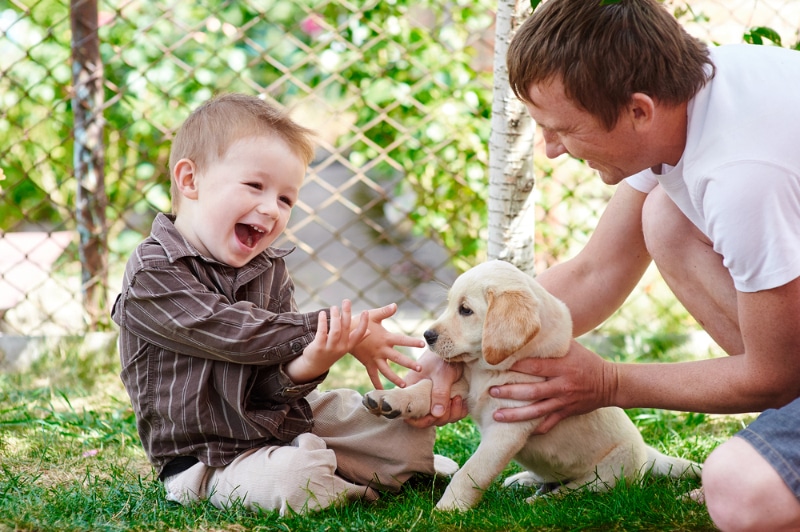
Puppy vs. Toddler: A Vet's Sanity-Saving Guide to Harmony (and Avoiding ER Visits)
Here's a cold shot of reality from the trenches: puppies don't automatically 'love' toddlers. In fact, a toddler's unpredictable movements and high-pitched screams can trigger a puppy's prey drive or fear response. It's not all Instagram-worthy cuddles; it's management, training, and a whole lot of patience.
For the love of all things fluffy and drool-covered, listen up: Introducing a puppy to a toddler requires constant supervision, clear boundaries for both species, and a safe space for the dog to retreat. Don't force interactions, teach your toddler to respect the puppy's space, and recognize signs of stress in your puppy. It's hard work, but a harmonious household is possible.
Why is My Puppy Suddenly Growling at My Toddler? Understanding Canine Communication
If your puppy is growling at your toddler, it's communicating discomfort or fear. Puppies don't have the verbal skills to say, "Hey, I need some space!" so they resort to body language like growling, lip-licking, or whale eye (showing the whites of their eyes). Ignoring these early warning signs can lead to a snap or bite, which is a disaster for everyone involved. The biological 'why' is rooted in the amygdala, the brain's fear center, which triggers a fight-or-flight response when the puppy feels threatened or overwhelmed.
The Clinical Perspective (Biological 'Why')
Let's dive deeper. A puppy's reaction to a toddler is deeply rooted in its evolutionary biology. A toddler's erratic movements and high-pitched noises can mimic prey behavior, triggering the puppy's predatory instincts. Furthermore, a puppy separated from its litter too early (before 8 weeks) may lack the social skills to appropriately interact with humans, especially unpredictable toddlers. This can manifest as fear-based aggression. I've seen this play out in the exam room more times than I can count – owners completely baffled by their puppy's sudden aggression towards their child, completely unaware of the underlying biological triggers.
Home-Care Hacks (Low-cost, Practical Tips)
- Create a "Puppy Safe Zone": This is a crate or a designated area where the puppy can retreat and be undisturbed. Teach your toddler that this is the puppy's special place and off-limits to them.
- Supervise, Supervise, Supervise: I cannot stress this enough. Never leave a puppy and toddler unsupervised, even for a second.
- Teach "Gentle" Touches: Guide your toddler's hand to gently pet the puppy. Reward both the toddler and the puppy for calm interactions.
- Use Positive Reinforcement: When the puppy and toddler are interacting calmly, reward them with treats and praise. This reinforces positive associations.
The Red Flag Checklist (When to Panic vs. When to Wait)
- Immediate Vet/Behaviorist Visit: If the puppy is showing signs of aggression (growling, snapping, biting), seek professional help immediately.
- Consult Vet: If the puppy is constantly hiding or avoiding the toddler.
- Monitor Closely: If the puppy shows mild signs of discomfort (lip-licking, yawning) but can be redirected. Implement management strategies and monitor for improvement.
"My Toddler Won't Stop Chasing the Puppy!" Setting Non-Negotiable Boundaries
Toddlers are naturally curious and, let's face it, persistent. They see a fluffy, four-legged creature and their instinct is to chase, grab, and explore. However, this behavior can be incredibly stressful for a puppy, leading to anxiety and potential aggression. The key here is teaching your toddler appropriate boundaries. This isn't just about the puppy's safety; it's about teaching your child empathy and respect for other living beings.
The Clinical Perspective (Biological 'Why')
From a developmental standpoint, toddlers are still learning impulse control. Their prefrontal cortex, the area of the brain responsible for decision-making and inhibiting impulses, is not fully developed. This explains why they might grab at a puppy's tail despite being told not to. Furthermore, a toddler's sensory processing is different from an adult's. They may not realize that their grip is too tight or that their actions are causing the puppy discomfort. This is where parental guidance and consistent redirection are mission-critical.
Home-Care Hacks (Low-cost, Practical Tips)
- Redirection is Your Best Friend: When your toddler starts chasing the puppy, redirect their attention to a different activity. Offer a toy, a book, or a snack.
- Create "Parallel Play" Opportunities: Set up activities where the toddler and puppy can be in the same room but engaged in separate activities. This allows them to get used to each other's presence without direct interaction.
- Use a Leash for Management: When the puppy is in the same room as the toddler, keep it on a leash. This allows you to quickly and easily redirect the puppy if the toddler gets too close or starts chasing.
- Teach "Leave It": Train your toddler (and puppy) the "leave it" command. This is a powerful tool for preventing unwanted interactions.
The Red Flag Checklist (When to Panic vs. When to Wait)
- Consult Vet: If the puppy is showing signs of stress (panting, pacing, hiding) even when the toddler isn't directly interacting with it.
- Consult Vet: If the toddler is becoming increasingly aggressive towards the puppy, despite your efforts to redirect them. This could indicate underlying behavioral issues in the child.
- Monitor Closely: If the toddler occasionally chases the puppy but responds to redirection and shows signs of learning.
What are the Calmest Dog Breeds? Finding a Family-Friendly Canine Companion
Let's face it, some dog breeds are simply better suited for life with toddlers than others. High-energy breeds like Border Collies or Jack Russell Terriers may be too much for a young child to handle. Instead, consider breeds known for their gentle temperament, patience, and tolerance of children. I always tell my clients, think about the dog's original purpose. A herding dog is going to *herd* – including your kids!
The Clinical Perspective (Biological 'Why')
Breed-specific behaviors are deeply ingrained in a dog's genetics. Centuries of selective breeding have shaped their temperament, energy levels, and trainability. For example, Labrador Retrievers were bred to retrieve waterfowl, which requires a soft mouth (gentle grip) and a willingness to please. This translates into a dog that is naturally gentle and tolerant of children. Conversely, breeds bred for guarding or hunting may have a higher prey drive and less tolerance for the unpredictable movements of toddlers.
Home-Care Hacks (Low-cost, Practical Tips)
- Do Your Research: Before bringing a puppy home, research different breeds and their suitability for families with toddlers. Consider factors like energy level, temperament, and trainability.
- Meet the Parents: If possible, meet the puppy's parents to get an idea of their temperament. This can give you valuable insight into the puppy's potential personality.
- Consider a Rescue Dog: Many adult dogs in shelters are already house-trained and have known temperaments. This can be a great option for families who want to avoid the challenges of raising a puppy.
- Talk to Your Vet: Your veterinarian can provide valuable guidance on choosing the right breed for your family and lifestyle.
The Red Flag Checklist (When to Panic vs. When to Wait)
- Immediate Vet/Behaviorist Visit: If you already have a dog and are considering adding a toddler to the family, consult with your veterinarian or a certified dog behaviorist. They can help you prepare your dog for the transition and address any potential behavioral issues.
- Consult Vet: If you are struggling to manage your dog's behavior around your toddler, despite your best efforts.
- Monitor Closely: If you are considering rehoming your dog due to behavioral issues related to your toddler, explore all other options first, such as training and behavior modification.