

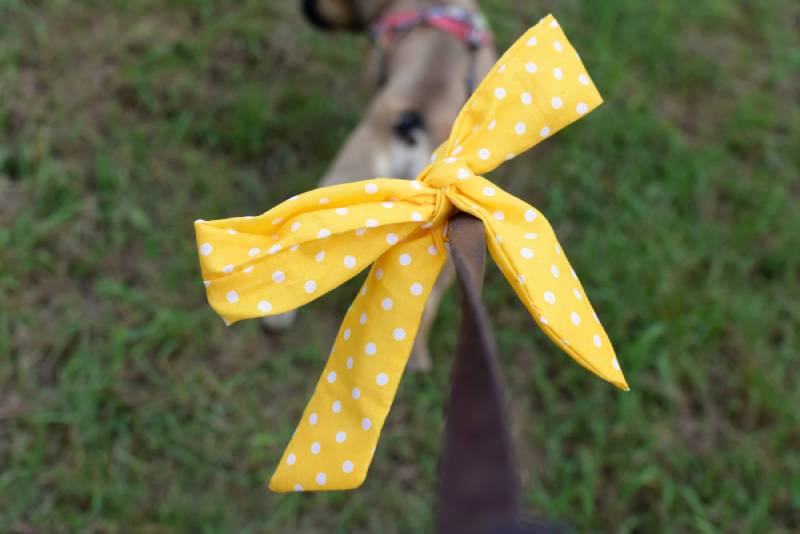
Decoding the Yellow Ribbon on a Dog Leash: What It Really Means (and How to Help)
Here's a counter-intuitive fact I tell my clients all the time: a friendly, tail-wagging dog can still be deeply stressed. That tail might be wagging, but its cortisol levels could be through the roof. That's why understanding subtle canine cues, like the meaning behind a yellow ribbon, is so mission-critical.
For Busy Owners: A yellow ribbon on a dog's leash signals that the dog needs space due to anxiety, fear, or other sensitivities. When you see a yellow ribbon, give the dog plenty of room, avoid direct eye contact, and don't approach. Respecting these boundaries helps reduce stress for the dog and its owner, promoting safer interactions.
Why is That Dog Wearing a Yellow Ribbon? Understanding 'Dog Needs Space'
A yellow ribbon on a dog's leash is a visual cue indicating that the dog requires extra space and should not be approached without the owner's consent. The ribbon, bandana, or even a yellow leash acts as a signal to others that the dog may be nervous, anxious, or have other reasons for needing distance. This isn't always about aggression; it's about respecting the dog's individual needs and boundaries.
What Types of Dogs Might Need a Yellow Ribbon? (The Clinical Perspective)
It's easy to assume a dog with a yellow ribbon is aggressive, but honestly, that's often not the case. Think of it like this: the dog might be dealing with underlying issues that make close encounters stressful. We're talking about dogs with PTSD-like symptoms from past trauma, senior dogs experiencing cognitive decline (similar to Alzheimer's due to beta-amyloid plaque formation in the brain), or even dogs with osteosarcoma whose pain is exacerbated by touch. Here's a more detailed breakdown:
- Service dogs in training: These dogs need to focus and shouldn't be distracted during critical learning periods.
- Rescue dogs: Often have unknown histories and may be fearful or reactive due to past abuse or neglect. Early trauma can alter their hypothalamic-pituitary-adrenal (HPA) axis, making them hyper-reactive to stimuli.
- Dogs with visual or hearing impairments: Rely on other senses and may be startled by sudden approaches. The loss of sensory input can lead to increased anxiety and a decreased ability to navigate their environment confidently.
- Senior dogs: Senses may be declining, and they may have mobility issues or cognitive dysfunction. Age-related cognitive decline can manifest as increased anxiety, confusion, and irritability, making them less tolerant of close interactions.
- Dogs with health conditions: May be in pain or discomfort and not want to be touched. Conditions like arthritis or hip dysplasia can cause chronic pain, making them more sensitive to touch and less tolerant of handling.
- Dogs with negative experiences: May have PTSD from previous encounters with other dogs. A traumatic experience, such as a dog attack, can create a lasting fear and anxiety response, leading to defensive behavior in similar situations.
- Skittish dogs: Just naturally nervous around strangers or other animals. Some dogs are genetically predisposed to anxiety or have personalities that make them more prone to fearfulness.
Also, consider that some dogs are simply going through a sensitive period. Just like human adolescents, young dogs experience hormonal fluctuations and neurological development that can make them more reactive. I see this all the time in the exam room – a dog that was perfectly friendly as a puppy suddenly becomes wary during adolescence.
'Give Dog Space': How to Respond When You See a Yellow Ribbon (Home-Care Hacks)
The most crucial thing is to respect the dog's space. Avoid direct eye contact, which dogs can interpret as a threat. Turn your body slightly away as you pass, and don't speak to the owner unless necessary. If you have your own dog, keep them at a safe distance – at least several feet. Here are some practical tips:
- Cross the street: If possible, create even more distance by crossing to the other side of the road.
- Redirect your dog: Use treats or toys to distract your dog and keep their attention focused on you.
- Communicate with the owner: If you must pass closely, a quick, calm verbal exchange with the owner can help coordinate a safe passing.
Honestly, a little empathy goes a long way. The owner is likely already stressed about managing their dog's anxiety, so your understanding and cooperation can make a huge difference.
The Yellow Ribbon Project: Where Did This Movement to Protect Reactive Dogs Originate?
The Yellow Ribbon Project began in Australia around 2000, thanks to dog trainer Terry Ryan. It gained momentum in dog clubs and spread globally when Eva Oliversson started the Yellowdog program in Sweden in 2012. Canadian dog trainer Tara Palardy then brought the initiative to North America. It’s a grassroots effort to educate the public about dogs who need space.
Decoding Canine Body Language: What Are the Signs of a Stressed or Fearful Dog? (The Red Flag Checklist)
Understanding canine body language is non-negotiable for any responsible pet owner (or anyone who interacts with dogs). It’s mission-critical to recognize the subtle signs of stress or fear before they escalate into more overt behaviors. These subtle cues often involve the autonomic nervous system, causing physiological changes that manifest in specific behaviors:
- Licking the lips: Often a sign of anxiety or appeasement.
- Ears pinning flat to the head: Indicates fear or submission.
- Showing the whites of the eyes (whale eye): Suggests discomfort or anxiety.
- Panting: Can be due to stress, even when the dog isn't hot.
- Pacing: A sign of nervousness or unease.
- Avoiding eye contact: A way to de-escalate a perceived threat.
- Whining, barking, growling: Vocalizations indicating distress or warning.
- Bristling hair along the back (piloerection): An involuntary response to fear or arousal, controlled by the sympathetic nervous system.
If these signals are ignored, the dog may escalate to lunging or biting. It's honestly better to err on the side of caution. If you're unsure about a dog's body language, give them space. It's always the safest approach.
Conclusion: Spreading Awareness About Dogs Who Need Space
The Yellow Dog Project isn't as well-known as it should be, so it's up to us to spread the word. If your dog needs space, consider using a yellow ribbon. If you see a dog with a yellow ribbon, respect their boundaries. By working together, we can create a safer and less stressful environment for all dogs.