

Inguinal Hernia in Dogs: Spotting, Treating, and Preventing Groin Bulges
Here's a fact that might surprise you: that cute, pudgy puppy belly might be hiding a ticking time bomb. I'm talking about inguinal hernias. Many owners think a little bulge is just puppy fat, but ignoring it could lead to a surgical emergency down the road. Don't wait until it's too late.
Busy Owners: Inguinal hernias in dogs involve abdominal contents pushing through a groin opening. These hernias can be uncomplicated (minor swelling) or complicated (life-threatening). Early detection and veterinary intervention are crucial to avoid complications.
What is an Inguinal Hernia in Dogs and Why Does it Happen?
An inguinal hernia in dogs occurs when abdominal contents protrude through the inguinal ring. This opening in the groin area allows structures like intestines or the uterus to slip through. Early detection is mission-critical for preventing life-threatening complications. This can be congenital (present at birth) or acquired later in life.
Okay, let's break down the biology here. The inguinal ring is a natural opening in the abdominal wall through which blood vessels, nerves, and the spermatic cord (in males) pass. In females, the round ligament of the uterus passes through it. Now, imagine increased abdominal pressure – from obesity, pregnancy, or even just straining to poop. This pressure can widen that ring, especially if the surrounding muscles are weak. What happens next? Intestines, bladder, uterus – they all see an opportunity and start to poke through. It's like a biological jailbreak!
Types of Inguinal Hernias: Uncomplicated vs. Complicated
Inguinal hernias come in two flavors: uncomplicated and complicated. An uncomplicated hernia means either a small defect exists with minimal protrusion or just fat pokes through. Complicated hernias involve abdominal organs becoming trapped. The type dictates the urgency and treatment approach.
- Uncomplicated: Imagine a tiny little outpouching. Maybe just some fat or the omentum (that lacy apron of tissue covering the abdominal organs) slips through. Usually, these guys don't cause a ruckus. No pain, no vomiting – just a soft bulge.
- Complicated: This is where things get dicey. Now you've got intestines, bladder, or even the uterus squeezing through that hole and getting stuck. That means blood supply can get cut off, leading to tissue death (necrosis) and a whole cascade of problems.
What are the Signs and Symptoms of Inguinal Hernias in Dogs?
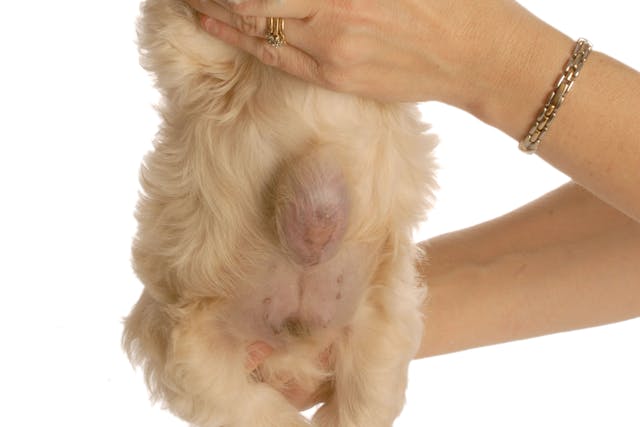
Signs of an inguinal hernia vary. Uncomplicated hernias often show only a soft, non-painful swelling in the groin. Complicated hernias present with pain, vomiting, frequent urination attempts, bloody urine, appetite loss, depression, abdominal pain, straining to defecate, fever, lethargy, or localized bruising. So, what does an inguinal hernia look like on a dog?
Think of it this way: uncomplicated hernias are like a quiet leak, while complicated ones are a full-blown flood. The key difference? Pain. If your dog is yelping when you touch that groin area, or if they're showing any of those other nasty symptoms like vomiting or bloody urine, you're dealing with a complicated hernia. And that's a surgical emergency, plain and simple. The clock is ticking.
Home-Care Hacks for Inguinal Hernias: What You Can Do Now
While you can't *treat* an inguinal hernia at home, you can be proactive. Gently palpate your dog's groin area regularly. Monitor for any changes in size or sensitivity of a bulge. Keep your dog at a healthy weight to reduce abdominal pressure. These steps help in early detection and management.
Honestly, the best "home-care hack" is vigilance. Get to know your dog's body. Feel around for lumps and bumps regularly. And if you find something suspicious, don't wait. Call your vet. A stitch in time saves nine, as they say – and in this case, that stitch could save your dog's life.
What Causes Inguinal Hernias in Dogs?
Inguinal hernias arise from both congenital and acquired factors. Trauma, obesity, and pregnancy increase the risk of acquired hernias. Older, unspayed females face higher risks due to hormonal weakening of tissues. Certain breeds like Pekingese and Retrievers are predisposed to congenital hernias. What about hormonal factors?
Estrogen, that lovely female hormone, can actually weaken connective tissues. Think of it as estrogen softening the collagen fibers that hold everything together. This is why older, unspayed females are at higher risk. Also, conditions like Cushing's disease or diabetes can mess with tissue integrity, making hernias more likely. It's all interconnected, this crazy canine body of theirs.
The Red Flag Checklist: When is an Inguinal Hernia an Emergency?
An inguinal hernia becomes an emergency when the protruding organs become trapped. This leads to compromised blood supply and tissue death. Red flags include pain, vomiting, bloody urine, lethargy, and fever. Immediate veterinary attention is needed for these symptoms. Don't delay!
Let's be brutally clear: if you see those red flags, you are in DEFCON 1 territory. I've seen owners try to wait it out, thinking it'll resolve itself. It won't. Those entrapped organs are dying by the minute. The longer you wait, the more damage occurs, and the lower your dog's chances of a full recovery become. Don't gamble with your dog's life. Get them to the vet, pronto.
How are Inguinal Hernias in Dogs Diagnosed?
Diagnosis usually involves a physical exam where the swelling is detected. Fine needle aspiration may be performed. Radiographs or ultrasound help determine which abdominal contents are entrapped. Notify your vet about pregnancy status or existing conditions like diabetes. What will the vet ask?
In the exam room, I always ask about the dog's history. Has she been pregnant? Is she on any medications? Does she have any other health problems? All of this information helps me piece together the puzzle. Sometimes, I'll even do a rectal exam to check for any masses or abnormalities that could be contributing to the problem. It's all about getting the full picture.
What is the Treatment for Inguinal Hernias?
Treatment involves surgical correction. The opening is surgically closed. The abdominal contents are replaced. Surgical mesh reinforces large defects. Spaying/neutering prevents recurrence. Post-operative pain management is critical. What about non-surgical options?
Honestly, there aren't any *real* non-surgical options. If that hole is there, and stuff is poking through it, surgery is the only way to fix it. Now, if it's a tiny, uncomplicated hernia, your vet might recommend just monitoring it. But that's not "treatment" – that's just watching and waiting for it to become a problem. And here’s the deal: dogs often rebound quickly after surgery.
What is the Cost of Surgery for Inguinal Hernias in Dogs?
Surgery costs vary widely, ranging from $400 to $8,000 depending on complexity. Complicated cases are more expensive. Pet insurance may cover some costs. Payment plans or CareCredit® can help manage expenses. How do you prepare for the financial burden?
Look, I get it. Vet bills can be scary. But think of it this way: that money is buying your dog a longer, healthier, and happier life. That's an investment worth making. Start a pet savings account. Look into pet insurance *before* you need it. And don't be afraid to talk to your vet about payment options. We're here to help you find a way to get your dog the care they need.
How to Handle Recovery and Management After Inguinal Hernia Surgery
Post-operative care includes two weeks of confinement. Limit exercise and prevent jumping. Keep the incision clean and dry. Monitor for signs of infection. Follow all veterinary instructions. What are the long-term management strategies?
Think of those two weeks as "house arrest" for your dog. Seriously. No running, no jumping, no playing with other dogs. You want that incision to heal properly, and any extra activity could cause it to break down. Keep your dog confined to a crate or a small room. And for goodness sake, don't let them lick the incision! That cone is their new best friend (even if they don't know it yet).
Preventing Inguinal Hernias in Dogs: Is it Possible?
Preventing inguinal hernias involves avoiding breeding affected dogs due to heredity. Early veterinary checks help detect hernias. Puppy-proof your home and monitor play to minimize trauma. Maintain a healthy weight through diet and exercise. Spaying female dogs is beneficial. How can responsible breeding help?
If you're a breeder, you have a moral obligation to prevent these hernias from being passed down. That means not breeding dogs who have them. Period. It's that simple. And if you're buying a puppy, ask the breeder about the parents' health history. A responsible breeder will be upfront and honest about any potential problems.