

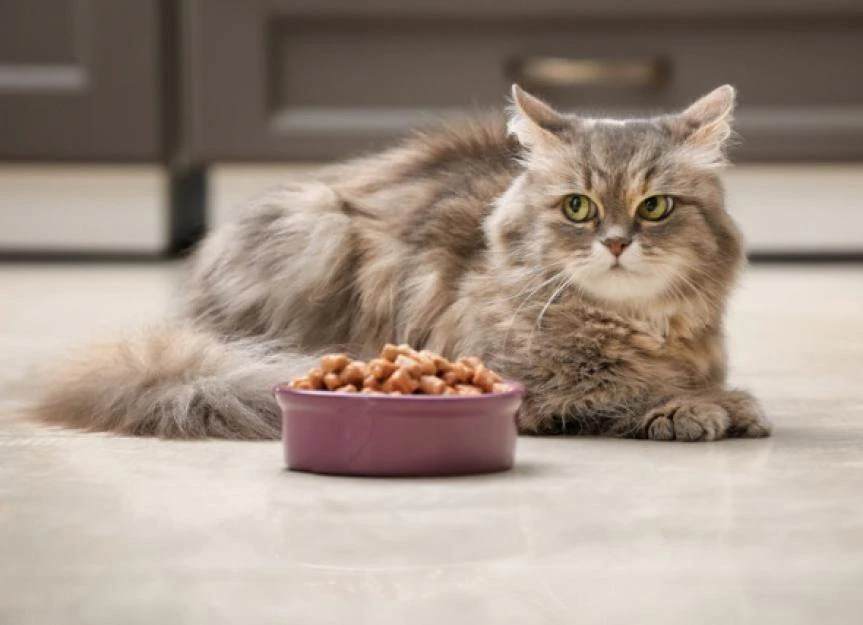
Dog Food for Cats: A Vet's Guide to Avoiding Nutritional Deficiencies
Here's a counter-intuitive fact from the trenches: I've seen more cats thrive on *some* human foods than on the cheapest dry kibble labeled "cat food." The pet food industry is good at marketing. But here's the deal: cats have very specific dietary needs that dog food simply can't meet long-term.
For busy owners: Cats can eat a tiny bit of dog food without immediate harm, but it's not a sustainable diet. Cats are obligate carnivores, needing high protein and specific nutrients. Dog food lacks these, potentially leading to severe health problems over time.
Can Cats Safely Eat Dog Food Long-Term? Understanding the Risks
No, cats absolutely should not be maintained on a diet of dog food. A short-term nibble probably won't kill them (I've seen worse in the exam room!), but chronic consumption is a recipe for disaster. Dog food lacks essential nutrients that cats need to survive and thrive.
Think of it this way: a human can survive on ramen noodles, but they won't be winning any marathons or feeling particularly good. The same applies here. The biological reason is that cats, as obligate carnivores, have evolved specific metabolic pathways that require nutrients found abundantly in meat but not in typical dog food formulations. For example, deficiencies in taurine (more on that later) can directly impact the heart muscle, leading to dilated cardiomyopathy.
Why Do Cats and Dogs Have Different Nutritional Needs? The Clinical Perspective
While cats and dogs both share our couches and our hearts, their nutritional needs are worlds apart. Cats are *obligate carnivores*. This means their entire physiology, from their teeth to their digestive system, is optimized for a meat-based diet. Dogs, however, are omnivores, able to digest and utilize nutrients from both meat and plants.
This difference stems from millions of years of evolution. Cats evolved as hunters, consuming whole prey animals. This provided them with all the necessary amino acids, vitamins, and minerals. Dogs, on the other hand, evolved alongside humans, adapting to a more varied diet. A key biological difference is in their ability to synthesize certain nutrients. Cats, for example, cannot synthesize taurine or arachidonic acid at sufficient levels, making dietary intake crucial. Dogs can produce these compounds internally.
What Are the Key Differences Between Cat Food and Dog Food? A Deep Dive
The nutritional profiles of cat and dog food differ significantly. Cat food is formulated to be higher in protein, fat, and specific vitamins and minerals. It also includes essential amino acids like taurine, which are critical for feline health. Dog food, on the other hand, typically has a higher carbohydrate content and lower levels of these key nutrients.
Taste Preferences: Why Cats May Not Even *Want* Dog Food
Cats and dogs perceive taste very differently. Cats lack the ability to taste sweetness and have fewer taste receptors overall. Cat food is specifically designed to be highly palatable to cats, often using strong meaty flavors and textures. Honestly, this is why most cats aren't clamoring for dog food in the first place.
Biologically, this difference in taste perception is linked to the structure of their taste buds and the expression of taste receptor genes. Cats have a limited repertoire of functional taste receptors, reflecting their evolutionary adaptation to a purely carnivorous diet. They are highly sensitive to amino acids and other compounds found in meat, which drive their food preferences.
Protein Levels: How Much Protein Do Cats Need?
Cats require significantly more protein in their diet than dogs do. A good cat food should have a protein content of at least 30-34% on an "As-Fed" basis, and even higher for kittens or cats with certain health conditions. Dog food typically contains 18-26% protein.
This higher protein requirement is driven by the cat's unique metabolic needs. Cats use protein not only for building and repairing tissues but also as a primary source of energy. They have a limited ability to regulate the enzymes involved in protein catabolism, meaning they are constantly breaking down amino acids. This constant protein turnover necessitates a higher dietary intake. Furthermore, protein is crucial for maintaining muscle mass, especially as cats age, helping to combat sarcopenia, the age-related loss of muscle.
Taurine: A Non-Negotiable Nutrient for Cats
Taurine is an essential amino acid that cats cannot synthesize on their own. It must be obtained from their diet. Taurine deficiency can lead to severe health problems, including dilated cardiomyopathy (weakened heart), vision loss, and digestive issues. All commercially available cat foods are supplemented with taurine.
Taurine plays a mission-critical role in various physiological processes. It is essential for the proper functioning of the heart muscle, maintaining retinal health, and supporting the digestive system. At a cellular level, taurine acts as an antioxidant and helps regulate calcium levels within cells. Without sufficient taurine, the heart muscle weakens, leading to dilated cardiomyopathy. The retina also degenerates, causing vision loss. In the digestive system, taurine is needed for the formation of bile salts, which are essential for fat digestion. This is why taurine is non-negotiable.
Arachidonic Acid: Why Cats Can’t Make It Themselves
Arachidonic acid is an essential fatty acid that cats cannot produce on their own. It must be ingested through their diet. Deficiency can lead to nonspecific signs of illness, such as abnormal liver and kidney values and skin problems. Dog food is rarely supplemented with arachidonic acid.
Arachidonic acid is a precursor to various signaling molecules involved in inflammation and immune responses. It plays a vital role in maintaining cell membrane structure and function. Cats lack the enzymes necessary to convert linoleic acid (another fatty acid) into arachidonic acid, making dietary intake essential. Without sufficient arachidonic acid, cats may experience impaired immune function and skin problems, such as pruritus (itching) and dermatitis.
Vitamin A: Essential for Coat Quality and Vision
Vitamin A is another nutrient that cats cannot synthesize on their own. Deficiency can lead to poor coat quality, muscle weakness, and night blindness. While dog foods often contain vitamin A, they do not contain enough to meet a cat's needs.
Vitamin A is a fat-soluble vitamin that plays a crucial role in vision, immune function, and cell growth. It is essential for the formation of rhodopsin, a light-sensitive pigment in the retina that is necessary for night vision. Vitamin A also supports the health of epithelial tissues, such as the skin and mucous membranes. Deficiency can lead to a dry, scaly coat, muscle weakness due to impaired protein synthesis, and impaired night vision.
Niacin: Supporting Energy Metabolism in Cats
Niacin, also known as vitamin B3, is essential for energy metabolism. Cats cannot make their own niacin and must obtain it from their diet. Animal tissue is the best source of niacin, and diets low in animal tissue may not provide enough of this nutrient.
Niacin is a precursor to NAD and NADP, two coenzymes that are essential for many metabolic reactions, including glycolysis, the citric acid cycle, and the electron transport chain. These reactions are critical for generating energy from carbohydrates, fats, and proteins. Niacin deficiency can lead to a variety of symptoms, including weight loss, loss of appetite, and neurological problems. It can also cause inflammation of the mucous membranes, leading to diarrhea and vomiting.
Why Life Stage Matters: Tailoring Nutrition to Your Cat's Needs
Nutritional needs vary throughout a cat's life. Kittens require more nutrients and energy for growth, while older cats need more protein to maintain muscle mass. Dog food cannot sustain a cat long-term at any life stage.
The Association of American Feed Control Officials (AAFCO) regulates pet food to ensure it meets minimum nutritional requirements for different life stages. AAFCO-approved cat foods are labeled as "formulated to meet the AAFCO Cat Food Nutrient Profile for… (a life stage)." These life stages include growth, maintenance, and all-life stages. Kittens require higher levels of protein, fat, and certain vitamins and minerals to support their rapid growth and development. Adult cats require a balanced diet to maintain their health and weight. Senior cats may benefit from higher protein levels to maintain muscle mass and lower levels of certain minerals to support kidney health.
Home-Care Hacks: What to Do If Your Cat Ate Dog Food
If your cat has only eaten a small amount of dog food, don't panic. Monitor them for any signs of digestive upset, such as vomiting or diarrhea. Provide plenty of fresh water and their regular cat food. However, if your cat has been eating dog food for an extended period, it's mission-critical to transition them back to a cat-specific diet gradually. Mix small amounts of cat food into their dog food, gradually increasing the proportion of cat food over several days to weeks.
Low-cost Tips: Supplement your cat's diet with small amounts of cooked meat (chicken, turkey, or fish) to boost their protein intake during the transition. Also, consider adding a taurine supplement to their food to ensure they are getting enough of this essential amino acid. Probiotics can help support their digestive system during the transition.
Red Flag Checklist: When to Call the Vet
Contact your veterinarian immediately if your cat exhibits any of the following symptoms after eating dog food for an extended period:
- Lethargy or weakness
- Loss of appetite
- Vomiting or diarrhea
- Weight loss
- Changes in vision
- Difficulty breathing
These symptoms could indicate a serious nutritional deficiency or underlying health problem. Early diagnosis and treatment are crucial for preventing long-term complications.
Ensuring a High-Quality Cat Food Diet: A Summary
A high-quality cat food is essential for ensuring your cat lives a long and healthy life. Dog food is not a suitable long-term alternative. Always choose a cat food that is specifically formulated to meet your cat's life stage and nutritional needs. Read the ingredient list carefully and look for high-quality protein sources and essential nutrients.
While a nibble of dog food is not toxic, remember that it is not designed to meet a cat’s nutritional needs. Don’t fall for the marketing hype. Read the labels yourself and ask your vet if you have any questions.