

Beyond Brindle: Decoding the Rainbow of Pit Bull Colors & Markings
Here's a curveball: coat color isn't just about aesthetics; it can sometimes hint at underlying health predispositions. Certain dilutions, while visually striking, are linked to conditions like Color Dilution Alopecia. So, while a blue Pit Bull might turn heads, responsible breeders prioritize health over fleeting trends.
For the busy owner: Pit Bulls display a stunning variety of colors and patterns, due to their diverse genetic makeup and the umbrella-like way the term 'Pit Bull' is used. Common colors include black, white, red, and blue, while patterns range from brindle and sable to spotted and masked. Understanding coat color genetics can help predict potential health issues associated with specific dilutions.
Why Does My Pit Bull's Color Matter? Unveiling Coat Color Genetics
A Pit Bull's coat color is determined by a complex interplay of genes that control pigment production and distribution. These genes influence the production of melanin, the pigment responsible for black and brown colors, and phaeomelanin, which produces red and yellow shades. Variations in these genes lead to the diverse array of colors and patterns seen in Pit Bulls. The MC1R gene, for example, dictates whether a dog expresses eumelanin (black/brown) or phaeomelanin (red/yellow). Coat color isn't just superficial; some genes linked to coat color also influence other traits, including disease susceptibility.
Black Pit Bulls: The Panther of Your Living Room
Black Pit Bulls often possess a striking, glossy coat, reminiscent of a panther. This deep black color is a breed standard for several breeds commonly referred to as Pit Bulls, including the American Staffordshire Terrier and the American Bully. The depth of the black color can vary depending on the individual dog's genetics, nutrition, and overall health. I remember one exam room visit where a client was convinced her black Pit Bull had a nutritional deficiency because his coat wasn't 'shiny enough.' Turns out, he just needed a better quality fish oil supplement to boost those omega-3s and give him that coveted gleam.
The Clinical Perspective (Biological 'Why')
The rich black color in these dogs is due to a high concentration of eumelanin, produced by melanocytes. These specialized cells reside in the hair follicles and are responsible for synthesizing and depositing pigment into the growing hair shaft. The intensity of the black hue is influenced by the amount of tyrosinase, an enzyme crucial for melanin production, and the presence of modifying genes that can either enhance or dilute the color.
Home-Care Hacks (Low-Cost, Practical Tips)
- Sun Protection: Believe it or not, even black dogs can get sunburnt! Limit prolonged sun exposure, especially during peak hours.
- Dietary Boost: A diet rich in omega-3 fatty acids can enhance coat shine. Consider adding fish oil supplements to your Pit Bull's food.
- Regular Grooming: Regular brushing helps distribute natural oils, keeping the coat healthy and glossy.
The Red Flag Checklist (When to Panic vs. When to Wait)
- Dull, Brittle Coat: Could indicate nutritional deficiencies or underlying health issues. Worth a vet visit.
- Sudden Color Change: While gradual fading is normal with age, a sudden change warrants investigation.
- Excessive Shedding: Could be a sign of allergies, stress, or hormonal imbalances.
White Pit Bulls: Understanding Albinism vs. Leucism & Health Concerns
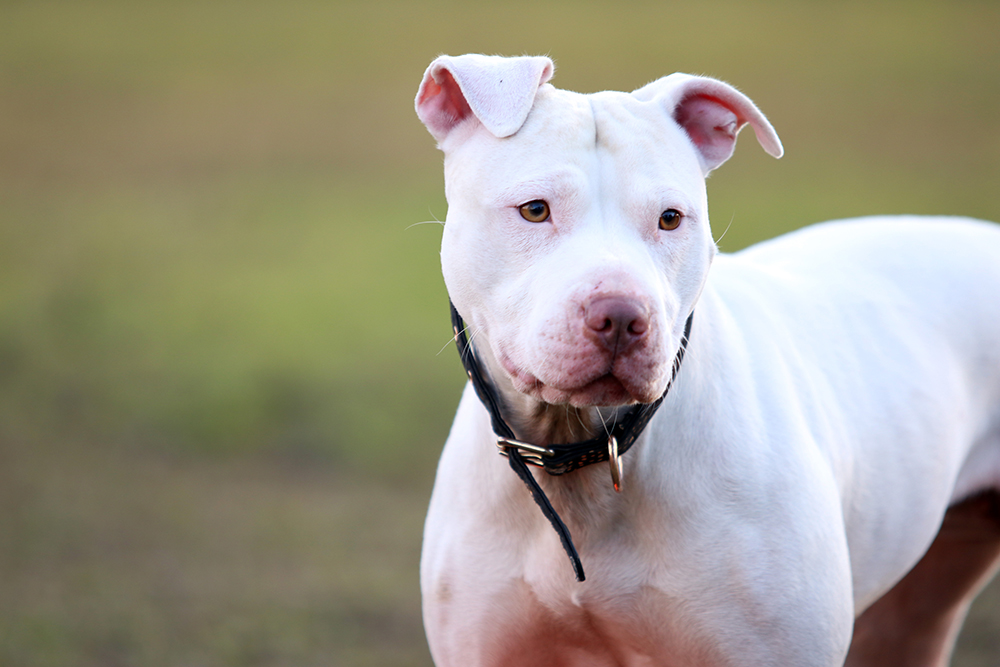
White Pit Bulls can be striking, but it's crucial to distinguish between a true white coat and albinism or leucism. Albinism is a complete lack of melanin, resulting in pink skin, blue eyes, and a pink nose. Leucism, on the other hand, causes white patches on the coat or skin. A white-coated Pit Bull may simply have genes that suppress pigment production, without the health concerns associated with albinism. I always tell my clients that a thorough exam is non-negotiable to rule out potential vision or hearing problems, which are sometimes linked to albinism.
The Clinical Perspective (Biological 'Why')
Albinism arises from a mutation in the TYR gene, which encodes tyrosinase, the enzyme essential for melanin synthesis. Without functional tyrosinase, melanocytes cannot produce melanin, leading to the complete absence of pigment. Leucism, however, is often due to defects in melanocyte migration during embryonic development, resulting in localized areas lacking pigment. These genetic defects can sometimes be associated with other developmental abnormalities.
Home-Care Hacks (Low-Cost, Practical Tips)
- Sunscreen: White dogs are highly susceptible to sunburn. Apply dog-safe sunscreen to exposed areas, especially the nose and ears.
- Protective Clothing: Consider using lightweight clothing to shield your white Pit Bull from the sun's harmful rays.
- Avoid Peak Sun Hours: Limit outdoor activities during the hottest part of the day.
The Red Flag Checklist (When to Panic vs. When to Wait)
- Pink Skin and Eyes: Classic signs of albinism, which can increase sensitivity to light and skin cancer risk.
- Hearing Loss: Albinism and leucism can sometimes be associated with deafness.
- Vision Problems: Nystagmus (involuntary eye movements) or increased sensitivity to light may indicate vision impairment.
Blue Pit Bulls: Exploring the Dilution Gene and Potential Health Issues
Blue Pit Bulls, with their silvery-gray or charcoal coats, are a relatively rare and sought-after color variation. This unique coloration is caused by two copies of the color dilution gene, which modifies the expression of black pigment. While visually appealing, the dilution gene can sometimes be associated with health problems, such as Color Dilution Alopecia (CDA), a condition that causes hair loss and skin inflammation. Honestly, I've seen too many cases of CDA in blue dogs to blindly recommend breeding for this color.
The Clinical Perspective (Biological 'Why')
The dilution gene, specifically the MLPH gene, affects the transport and distribution of melanin within melanocytes. In diluted dogs, melanin granules clump together, leading to uneven pigment distribution in the hair shaft. This clumping weakens the hair structure, making it prone to breakage and contributing to hair loss in CDA-affected dogs.
Home-Care Hacks (Low-Cost, Practical Tips)
- Gentle Shampoos: Use mild, hypoallergenic shampoos to avoid irritating the skin.
- Omega-3 Supplements: Help support skin health and reduce inflammation.
- Avoid Harsh Chemicals: Steer clear of harsh grooming products or flea treatments that can further irritate the skin.
The Red Flag Checklist (When to Panic vs. When to Wait)
- Hair Loss: Especially around the ears, back, and flanks.
- Scaly, Itchy Skin: A hallmark of CDA.
- Secondary Infections: Damaged skin is more susceptible to bacterial or fungal infections.
Red, Fawn, and Tan Pit Bulls: Common Colors and Genetic Variations
Red, fawn, and tan are common Pit Bull colors, ranging from coppery-chestnut to light-yellowish. These colors are caused by phaeomelanin. The intensity depends on modifier genes. Red-nose Pit Bulls aren't a separate breed, just a color variation. Remember, color doesn't define temperament or breed.
Brindle, Sable, and Merle Pit Bulls: Understanding Complex Patterns
Brindle is streaky, sable has dark-tipped hairs, and merle is marbled. Merle isn't kennel club-accepted but occurs. These patterns add visual interest but don't alter the dog's nature. Responsible breeding focuses on health, not just aesthetics.
Spotted and Masked Pit Bulls: The Charm of Markings
Spotted and masked markings add character. Spots/patches are standard for American Staffordshire Terriers. Masks are coloration on the muzzle/face. Markings are superficial but contribute to individuality.