

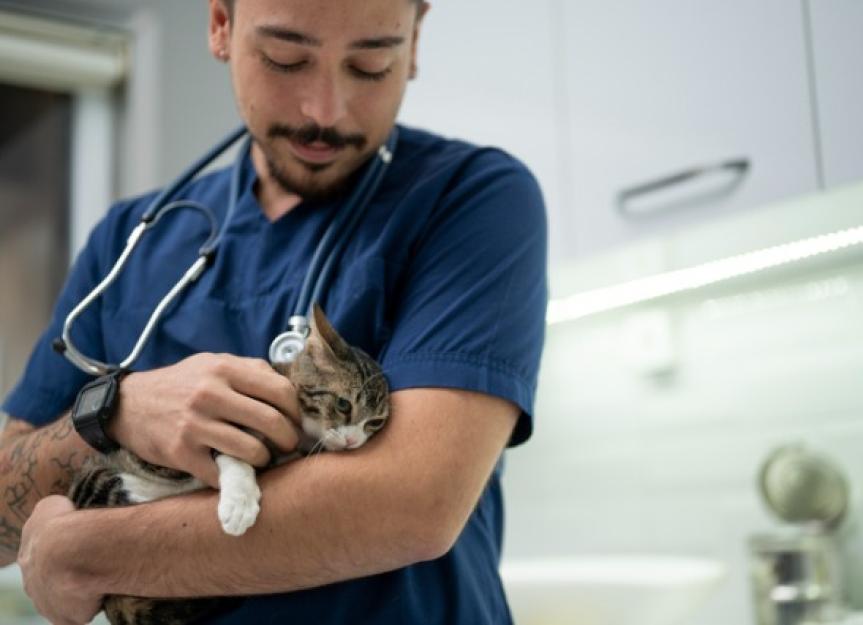
Why is My Cat Suddenly Uncoordinated? Understanding Thiamine (Vitamin B1) Deficiency
Here's a weird fact from the exam room: I've seen more than one cat diagnosed with a seizure disorder, only to discover the real culprit was a simple vitamin deficiency. Turns out, sometimes the most dramatic symptoms have surprisingly straightforward solutions. So, if your cat is acting a little 'off', don't panic, but don't delay either.
For Busy Owners: Thiamine (Vitamin B1) deficiency can cause serious neurological problems in cats. The good news is it's often treatable with thiamine supplementation. Early recognition of symptoms like incoordination and loss of appetite is critical for a full recovery.
What is Thiamine Deficiency (Vitamin B1) in Cats?
Thiamine, or vitamin B1, is mission-critical for your cat's carbohydrate metabolism. Without enough thiamine, their body can't efficiently convert sugars and starches into energy. This shortfall especially impacts the nervous system, leading to a range of concerning neurological symptoms. So, a deficiency can quickly turn into a crisis.
Thiamine is a water-soluble vitamin that plays a central role in glucose metabolism. Specifically, it acts as a coenzyme for several key enzymes in the pentose phosphate pathway and the Krebs cycle. These pathways are how cells generate energy (ATP). When thiamine is deficient, these metabolic processes are disrupted, leading to an energy crisis in cells, particularly neurons, which are highly energy-dependent. This energy deprivation leads to neuronal dysfunction and the observed neurological signs.
Why is My Cat Suddenly Uncoordinated? Understanding the Symptoms of Thiamine Deficiency
Honestly, the symptoms of thiamine deficiency can be downright scary. We're talking about serious neurological issues that can manifest rapidly. If you notice any of these, it's time to get your cat to a vet ASAP.
- Ventriflexion (neck curling): This is where your cat's neck dramatically bends downwards. I've seen owners mistake this for a simple crick in the neck, but it's far more serious. The muscles of the neck weaken due to disrupted nerve function.
- Incoordination (ataxia): Your cat might seem drunk, stumbling around and unable to walk a straight line. This is due to cerebellar dysfunction.
- Abnormal Gait: A strange, spastic way of walking. Nerves controlling muscle movement misfire.
- Circling: Compulsive circling behavior, often in one direction. This indicates a lesion or dysfunction in the brain.
- Falling: Sudden loss of balance and collapsing. The nervous system fails to maintain posture.
- Head Tilt: Persistent tilting of the head to one side. This is usually linked to vestibular (inner ear) problems secondary to neurological damage.
- Dilated Pupils: Pupils that are larger than normal and don't respond to light. This shows autonomic nervous system dysfunction.
- Opisthotonos: Backward arching of the head, neck, and spine. This is a severe sign of neurological damage and is an emergency.
- Stupor: Unresponsiveness and decreased level of consciousness. Brain function is severely impaired.
- Seizures: Uncontrolled electrical activity in the brain, leading to convulsions. Neuronal excitability increases due to metabolic imbalances.
Don't forget the GI stuff either. Vomiting, drooling, loss of appetite, and weight loss can precede the neurological signs. So, pay attention to any changes in your cat's eating habits.
What are the Potential Causes for Vitamin B1 Deficiency in Cats?
Several factors can lead to thiamine deficiency. Honestly, some are more common than others, but it’s mission-critical to consider all possibilities. Here’s a breakdown:
- Prolonged Anorexia: If your cat isn't eating for days, they're not getting thiamine. Period.
- Malabsorption: Diseases that prevent proper nutrient absorption in the gut. Conditions like inflammatory bowel disease (IBD) can disrupt thiamine uptake.
- Surgical Resection: Removing parts of the small intestine (jejunum and ileum) can reduce the surface area for thiamine absorption.
- Diuresis: Excessive urination can flush out water-soluble vitamins like thiamine. Kidney disease and diabetes are potential culprits.
- All-Meat Diets: Meat alone doesn't provide balanced nutrition. It lacks sufficient thiamine and other essential nutrients.
- Sulfur Dioxide Preservatives: Sulfur dioxide, used to preserve meat, can destroy thiamine. Avoid foods with this preservative.
- Food Processing Errors: Sometimes, things go wrong during food manufacturing. Recalls happen when thiamine is accidentally destroyed during processing.
- Thiaminase: Certain raw fish contain thiaminase, an enzyme that breaks down thiamine. Feeding your cat raw fish carries a risk. Thiaminase cleaves thiamine's methylene bridge, rendering it inactive.
How Will the Vet Diagnose a Thiamine Deficiency?
Diagnosis involves piecing together the clinical signs, history, and response to treatment. Your vet will look for the telltale neurological symptoms, ask about your cat's diet, and consider any underlying conditions. Measuring thiamine levels in the blood can confirm the diagnosis, but results may take time. So, treatment is often started based on suspicion.
What is the Treatment for Thiamine Deficiency in Cats?
The treatment is straightforward: give thiamine! It can be injected for a quick boost or given orally. The key is to start treatment ASAP to minimize neurological damage. The sooner, the better the chances of a full recovery.
Home-Care Hacks for Cats Recovering From Thiamine Deficiency
- Dietary Changes: Switch to a high-quality, balanced commercial cat food. Avoid all-meat diets and foods with sulfur dioxide.
- Supplementation: Your vet may recommend a thiamine supplement. Follow their instructions carefully.
- Quiet Environment: Reduce stress and provide a calm, quiet space for your cat to recover.
- Assisted Feeding: If your cat isn't eating, you may need to assist-feed them using a syringe. Your vet can show you how.
- Physical Therapy: Gentle massage and range-of-motion exercises can help improve muscle function and coordination.
Red Flag Checklist: When Should You Panic?
- Seizures: Any seizure activity warrants an immediate vet visit.
- Opisthotonos: The backward arching of the head and spine is an emergency.
- Unresponsiveness: If your cat is not responding to stimuli, seek immediate veterinary care.
- Rapid Deterioration: If your cat's condition is worsening rapidly, don't wait. Get them to a vet now.
- Difficulty Breathing: Neurological problems can sometimes affect breathing. If your cat is struggling to breathe, it's an emergency.