
Decoding Shar-Pei Colors: A Vet's Guide to 20 Stunning Coats
Here's a curveball for you: not all Shar-Pei colors are created equal. While the American Kennel Club (AKC) recognizes 17 colors, the United Kennel Club and other registries acknowledge 20. That means some beautiful pups are technically 'unofficial' in certain show rings. Honestly, it's a bit of a head-scratcher.
For busy owners: Shar-Pei dogs boast a diverse palette of coat colors, from common blacks to rare lilac dilutes. The AKC recognizes 17 colors, but 20 colors exist. Understanding Shar-Pei coat genetics and breed standards will help you appreciate the breed's diversity.
Why is My Shar-Pei's Coat Color Important? Understanding Shar-Pei Coat Genetics
Coat color isn't just about aesthetics; it's a window into the dog's genetics and, potentially, its health. The genes that dictate pigment production (melanin, specifically) can sometimes be linked to other traits. You see this all the time in the exam room. A Shar-Pei with a dilute coat color (like blue or lilac) might be more prone to certain skin conditions. It all boils down to melanocytes, the cells responsible for producing pigment. Dilution genes affect how these melanocytes distribute pigment, and sometimes, that altered distribution can impact skin health. This is why understanding Shar-Pei coat genetics is mission-critical.
The Clinical Perspective (Biological ‘Why’)
The biological mechanisms behind coat color are complex, but understanding the basics is essential. Two types of melanin are at play: eumelanin (black/brown pigment) and phaeomelanin (red/yellow pigment). Genes control the production, distribution, and modification of these pigments. Dilution genes, for example, affect the intensity of eumelanin, turning black into blue or brown into lilac. These genes often influence the development and function of melanocytes. Aberrant melanocyte function can lead to pigment clumping or uneven distribution, affecting not just coat color but also potentially impacting skin sensitivity and immune responses in the skin.
Home-Care Hacks (Low-Cost, Practical Tips)
- Regular Skin Checks: Regardless of coat color, examine your Shar-Pei's skin regularly for any signs of irritation, redness, or hair loss.
- Gentle Grooming: Use a soft brush to avoid irritating the skin, especially in dogs with dilute coat colors.
- Dietary Support: A high-quality diet rich in omega-3 fatty acids can support skin health.
The Red Flag Checklist (When to Panic vs. When to Wait)
- Excessive Itching: Constant scratching, licking, or rubbing could indicate allergies or skin infections.
- Hair Loss: Patches of missing fur, especially around the face or paws, warrant a vet visit.
- Skin Lesions: Any sores, bumps, or scaly patches should be evaluated by a veterinarian.
What are the Standard and Non-Standard Shar-Pei Colors? A Comprehensive List
The Shar-Pei breed exhibits a rainbow of colors, but only some meet the official standards of the AKC. These colors range from solid hues like black and cream to more complex patterns like sable. The AKC recognizes 17 colors, while other kennel clubs embrace a broader spectrum. Honestly, the nuance is so subtle that even seasoned breeders can sometimes disagree.
Here's a breakdown of 20 Shar-Pei coat colors, including those recognized by the AKC and those that are considered non-standard:
1. Apricot Dilute
Lighter than red and darker than cream, apricot dilute Shar-Peis often have a pink nose. The dilution gene affects melanin production, resulting in a softer, pastel-like shade. This subtle shift in pigmentation is due to reduced melanocyte activity.
2. Black
A common and striking color, black Shar-Peis showcase their wrinkles beautifully. The rich, dark pigment is a result of high eumelanin concentration. The depth of color depends on the expression of the black (B) locus genes.
3. Blue Dilute
Blue dilute Shar-Peis have a consistently blue-gray coat without dark pigmentation. The dilution gene alters eumelanin, creating the blue-gray hue. This process involves the modification of melanosome structure, affecting light reflection.
4. Lilac Dilute
A mix of chocolate and blue genes, lilac dilute Shar-Peis have a washed-out lavender appearance. The combination of dilution genes on both eumelanin pathways creates this unique color. These dogs may have a pink nose and paws.
5. Cream
Similar to white but with honey hues, cream Shar-Peis are AKC standard. The light pigmentation is due to a lower concentration of both eumelanin and phaeomelanin. Extremities like ears may take on a blonde hue.
6. Cream Dilute
With a pale pink nose and light cream fur, cream dilute Shar-Peis look like a light pink rose. The dilution gene further reduces pigment, creating a very soft, pastel appearance. The lack of intense pigment can sometimes make them more prone to sunburn.
7. Brown
Lighter than chocolate but darker than cream, brown Shar-Peis often have chocolate markings. The brown color results from a specific type of eumelanin. The intensity varies depending on modifier genes.
8. Chocolate Dilute
Resembling an unwrapped milk chocolate bar, chocolate dilute Shar-Peis have a soft brown color without dark pigmentation. The dilution gene lightens the brown pigment. This creates a uniform, almost velvety appearance.
9. Red
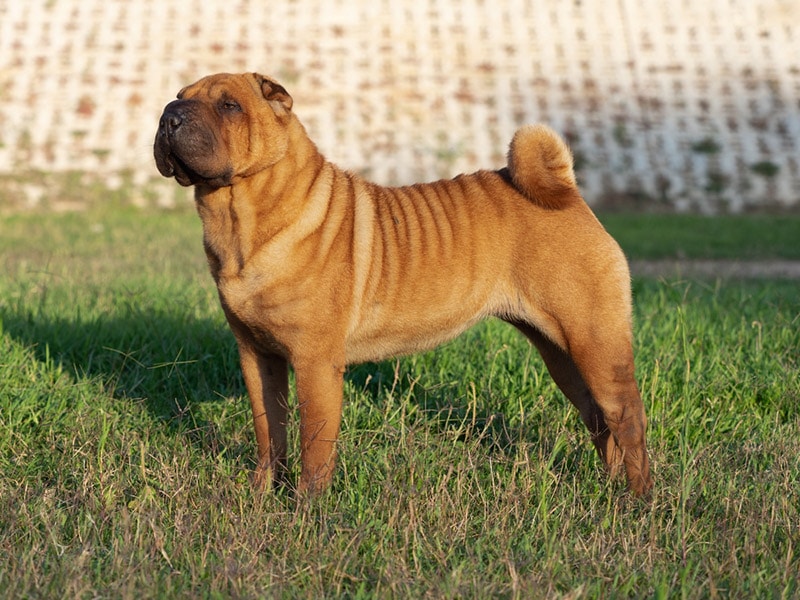
A popular color for Shar-Peis, red is usually rare in canines. The vibrant red hue is due to phaeomelanin. The intensity of the red can vary from light to deep, depending on genetic factors.
10. Five-Point Red Dilute
Amber fur with darker hues around the eyes, nose, paws, and tail characterize this rare Shar-Pei. The dilute gene affects phaeomelanin. This creates a contrasting pattern with darker points.
11. Red Fawn
Darker than fawn but lighter than red, red fawn Shar-Peis often have darker pigmentation in their folds. The color is a blend of phaeomelanin and some eumelanin influence. The distribution of pigment creates depth and dimension.
12. Fawn
Light tan with a hint of red, fawn Shar-Peis have a slightly lighter coat than red fawn. The color is primarily phaeomelanin. The lighter shade results from less intense pigment production.
13. Isabella Dilute
Another name for dilute fawn, Isabella coats are light tan with pink or blue pigmentation. The dilute gene acts on phaeomelanin. This creates a soft, muted color palette.
14. Black Sable
Similar to a German Shepherd, black sable Shar-Peis have lighter fur with dark tips. Agouti genes cause sable patterns. This results in banded hairs with dark tips.
15. Cream Sable
Cream in color with dark tips, cream sable Shar-Peis have a striped appearance. Agouti genes combined with cream pigmentation creates this effect. The dark tips are concentrated in the folds.
16. Fawn Sable
Fawn sable coats have red, tan, and black hairs. Agouti genes control the distribution of pigment. This creates a complex, multi-colored coat.
17. Red Sable
Darker than fawn sable, red sable Shar-Peis have black patches on their face and paws. Agouti genes and phaeomelanin create this color. The darker patches add contrast.
18. White
Recognized by the UKC but not the AKC, white Shar-Peis have snow-white coats. The lack of pigment can be associated with health issues. This is why breeding solid white dogs is not recommended.
19. Blue Sable
These dogs may take on a charcoal color due to black tips on their blue fur. The combination of dilution and sable patterns creates this unique color. This variation is not included in the AKC breed standard.
20. Brown Sable
Light brown fur with black ends characterizes the brown sable Shar-Pei. Agouti genes and brown pigmentation create this color. These dogs are unlikely to be seen in US show rings.
How Does Coat Color Impact Shar-Pei Health and Well-being?
While coat color is primarily an aesthetic trait, it can sometimes be linked to certain health predispositions in Shar-Pei dogs. Dilute colors, in particular, have been associated with an increased risk of skin issues. Now, I'm not saying that every blue or lilac Shar-Pei is doomed to a life of dermatological woes, but it's something to be aware of. The link stems from the way dilution genes affect melanocytes, the pigment-producing cells. Altered melanocyte function can lead to pigment clumping or uneven distribution, which can, in turn, impact skin sensitivity and immune responses.
The Clinical Perspective (Biological ‘Why’)
The relationship between coat color and health isn't always straightforward, but there are some key biological mechanisms to consider. For instance, dogs with white coats have a higher incidence of deafness. This is because melanocytes play a crucial role in the development of the inner ear. When these cells are absent or dysfunctional, it can disrupt the delicate processes necessary for hearing. Similarly, certain pigment genes have been linked to an increased risk of specific cancers. It's all about understanding the pleiotropic effects of genes, meaning that a single gene can influence multiple traits.
Home-Care Hacks (Low-Cost, Practical Tips)
- Sun Protection: Dogs with light-colored coats, especially those with white or cream fur, are more susceptible to sunburn. Limit their sun exposure during peak hours and consider using a dog-safe sunscreen on exposed areas like the nose and ears.
- Regular Skin Exams: Get in the habit of regularly checking your Shar-Pei's skin for any signs of irritation, redness, or lesions. Pay particular attention to areas with sparse fur or light pigmentation.
- Omega-3 Fatty Acids: Supplementing your dog's diet with omega-3 fatty acids can help support skin health and reduce inflammation. Talk to your vet about the appropriate dosage.
The Red Flag Checklist (When to Panic vs. When to Wait)
- Persistent Itching: If your Shar-Pei is constantly scratching, licking, or rubbing, it's a sign that something's not right. Rule out allergies, parasites, and skin infections.
- Hair Loss: Patchy hair loss, especially in areas with light pigmentation, should be evaluated by a vet. It could indicate an underlying skin condition.
- Skin Lesions: Any sores, bumps, or scaly patches on the skin should be examined by a veterinarian. Early detection and treatment are key to preventing complications.
Is the Shar-Pei the Right Breed for You? Considering Temperament and Care
Beyond their appearance, the Shar-Pei is a unique breed with specific needs and temperament traits. They typically weigh between 45 and 60 pounds and stand 18 to 20 inches tall. While loyal to their families, they can be aloof and wary of strangers. Early socialization is mission-critical. Their signature wrinkles require diligent care to prevent skin infections. Honestly, it's not a breed for the faint of heart.
Shar-Pei pups should be introduced to having their ears, eyes, and skin folds checked and cleaned from a young age. Investing in pet insurance is a smart move, as skin problems can be costly.