

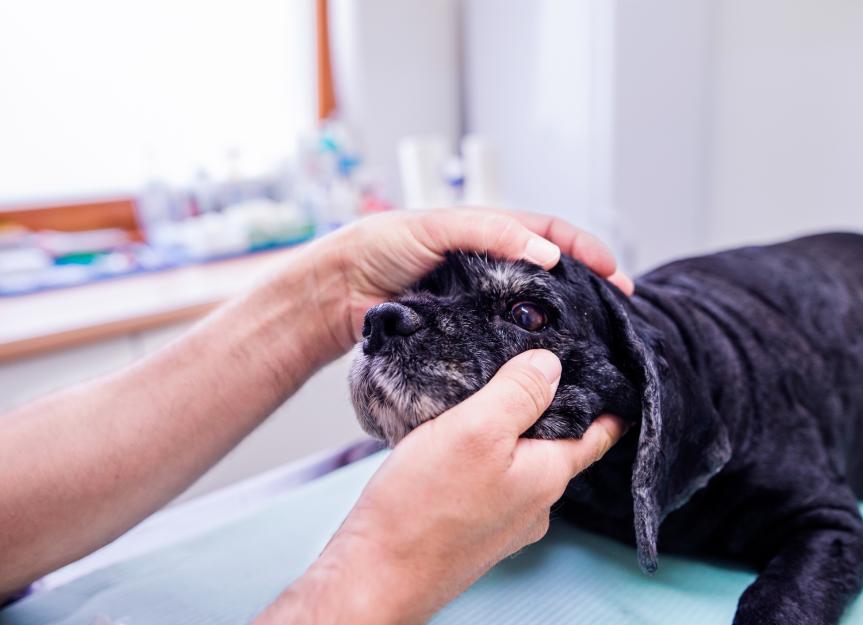
Blood in My Dog's Eye? A Vet's Guide to Hyphema Causes and Care
Here's a counter-intuitive fact I tell my clients in the exam room: a little blood in the eye is almost always a sign of a *bigger* problem elsewhere in the body. Don't just focus on the eye; think about systemic issues like clotting disorders or even tick-borne diseases.
For Busy Owners: Hyphema, or blood in the front of the eye, isn't a disease itself, but a sign of an underlying issue. It can range from mild to severe and requires prompt veterinary attention to prevent potential vision loss. Quick diagnosis and treatment of the root cause are essential for a good outcome.
What is Hyphema in Dogs? Understanding Dog Eye Bleeding
Hyphema is the presence of blood in the anterior chamber of a dog's eye, the space between the iris and cornea. It's not a standalone disease, but rather a symptom indicating an underlying health problem. The appearance can vary from a slight red tinge to a complete filling of the eye with blood. Imagine looking through a fishbowl filled with red dye – that's often what it looks like to the dog.
The underlying biological mechanism involves the rupture of blood vessels within the eye. This can be due to localized trauma, inflammation (uveitis), or systemic conditions affecting blood clotting or blood pressure. For example, hypertension can weaken blood vessel walls, making them prone to rupture. In cases of uveitis, inflammatory mediators like prostaglandins increase vascular permeability, leading to leakage of blood into the anterior chamber.
What Does Hyphema in Dogs Look Like? Recognizing the Signs
The most obvious sign is bright red blood visible in the front of the eye. It may appear as a diffuse redness, localized clots, or a layering effect where blood settles at the bottom of the anterior chamber due to gravity. The color can vary from bright red to a darker, more purple hue depending on the age of the blood.
Beyond the visible blood, dogs may exhibit other symptoms. Pawing at the eye is common, as is squinting (blepharospasm) due to pain and light sensitivity. In severe cases, vision may be impaired, leading to bumping into objects or reluctance to move around. Biologically, the pain arises from increased intraocular pressure and inflammation stimulating nociceptors (pain receptors) in the eye. The blood itself can also obstruct the flow of aqueous humor, further elevating pressure and exacerbating pain.
What are the Potential Causes of Hyphema in Dogs? A Clinical Perspective
The causes are diverse, ranging from trauma to systemic diseases. Trauma, such as a blow to the head or a scratch to the cornea, can directly damage blood vessels in the eye. Rat bait poisoning interferes with vitamin K-dependent clotting factors, leading to uncontrolled bleeding. Systemic hypertension, often secondary to kidney disease or hyperthyroidism, can cause fragile retinal vessels to rupture. Infectious diseases, like ehrlichiosis and leptospirosis, can trigger vasculitis (inflammation of blood vessels), increasing their permeability and leading to hyphema. Finally, certain cancers, both within the eye and elsewhere in the body (metastatic disease), can cause hyphema either directly or indirectly.
The Clinical Perspective (Biological ‘Why’): The underlying biological mechanisms for each cause are distinct. Trauma causes direct physical damage to blood vessels. Rat bait inhibits the production of clotting factors in the liver. Hypertension increases hydrostatic pressure within vessels, leading to rupture. Infectious agents trigger inflammatory cascades that damage vessel walls. Cancers can either invade ocular tissues directly or release factors that promote angiogenesis (new blood vessel formation) and subsequent bleeding.
How is Hyphema Diagnosed in Dogs? The Vet's Diagnostic Process
Diagnosis involves a thorough ophthalmic exam, systemic evaluation, and targeted testing. The ophthalmic exam includes assessing visual acuity, pupillary light reflexes, and intraocular pressure (tonometry). A complete blood count (CBC) and serum chemistry profile can reveal underlying systemic diseases, such as kidney disease or clotting disorders. Urinalysis can detect proteinuria, a sign of hypertension. Blood pressure measurement is crucial to rule out hypertension as a cause. Specific blood tests for infectious diseases (e.g., Ehrlichia, Leptospira) and clotting profiles (e.g., prothrombin time, partial thromboplastin time) may be warranted based on the initial findings. In some cases, imaging (radiographs or ultrasound) may be necessary to rule out tumors or other structural abnormalities.
Home-Care Hacks (Low-cost, practical tips): First, keep your dog in a dimly lit environment to reduce light sensitivity and pain. Discourage activities that could increase intraocular pressure, such as excessive barking or jumping. Apply a cold compress to the affected eye for 10-15 minutes several times a day to help constrict blood vessels and reduce inflammation. Most importantly, DO NOT administer any medications, including over-the-counter eye drops, without consulting your veterinarian.
What is the Treatment for Hyphema in Dogs? Medication and Management
Treatment depends entirely on the underlying cause. For hypertension, antihypertensive medications are prescribed. For infectious diseases, antibiotics or antifungals are used. For clotting disorders, vitamin K supplementation or blood transfusions may be necessary. Topical corticosteroids and non-steroidal anti-inflammatory drugs (NSAIDs) can help reduce inflammation within the eye. Mydriatics (pupil-dilating drugs) like atropine can relieve pain associated with ciliary muscle spasm. In severe cases, surgery may be necessary to remove blood clots or address underlying structural abnormalities.
The Red Flag Checklist (When to panic vs. when to wait): Seek immediate veterinary attention if your dog exhibits any of the following: sudden vision loss, severe pain (excessive pawing, vocalization), persistent bleeding despite treatment, or concurrent systemic signs (lethargy, vomiting, diarrhea). A small amount of blood that resolves quickly may be less concerning, but should still be evaluated by a veterinarian to rule out underlying causes.
How Can I Prevent Hyphema in My Dog? Protecting Your Pet's Vision
Prevention focuses on addressing underlying risk factors. Regular veterinary checkups can help detect systemic diseases like hypertension and kidney disease early on. Keeping your dog up-to-date on vaccinations and parasite prevention can reduce the risk of infectious diseases. Avoidance of trauma is crucial; keep your dog away from hazardous objects and supervise their interactions with other animals. If your dog is on medications that affect blood clotting (e.g., warfarin), monitor them closely for signs of bleeding and adjust the dosage as needed.
Honestly, I tell my own clients that prevention is a multi-pronged approach. It's not just about avoiding obvious dangers; it's about proactively managing your dog's overall health and well-being.
Hyphema in Dogs FAQs
Will hyphema cause blindness in my dog?
If left untreated, hyphema can lead to vision loss. This is why it is important to bring your dog to a veterinarian as soon as you notice any blood in the eye, so that the right treatment can be started quickly.
Is hyphema life-threatening for my dog?
Hyphema itself is not life-threatening; however, the underlying causes of hyphema can be. For example, rat bait poisoning, which can cause hyphema, is life-threatening.
Is hyphema painful for dogs?
Hyphema can be painful for dogs, especially if it gets very severe. Dogs will paw at their eye, will squint often, and may seem more depressed if they are experiencing eye pain.
Featured Image: Halfpoint/iStock / Getty Images Plus via Getty Images