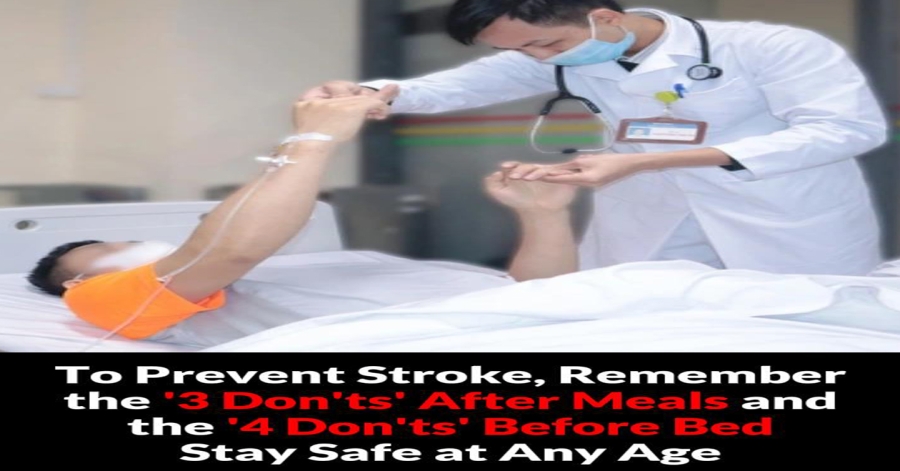
Stroke is one of the leading causes of death and long-term disability worldwide, often striking suddenly and with devastating effect. However, much of this risk can be managed through mindful daily habits, particularly around meal and bedtime routines. By following a simple set of guidelines—known as the "3 Don’ts” after eating and the "4 Don’ts” before sleep—you can significantly protect your vascular health and lower your risk, regardless of age.
### **The "3 Don’ts” After Meals**
**1. Don’t Smoke**
Smoking after a meal is especially harmful, as it spikes blood pressure and constricts blood vessels when your body is directing blood to aid digestion. This double strain raises the risk of clot formation—a key trigger for stroke.
**2. Don’t Shower Immediately**
Bathing right after eating, particularly in hot water, shifts blood flow toward the skin and away from your digestive system and brain. This can disrupt digestion and reduce cerebral oxygen, potentially causing dizziness or fainting, especially in older adults or those with hypertension.
**3. Don’t Sleep or Lie Down Right Away**
Lying down too soon after eating encourages acid reflux and impairs digestion and circulation. Over time, this habit can contribute to obesity and heart issues—both of which increase stroke risk. Wait at least 30–60 minutes before resting.
### **The "4 Don’ts” Before Sleep**
**1. Don’t Eat a Heavy or Late Meal**
A late, large meal keeps your digestive system active when it should be winding down, disrupting sleep and elevating overnight blood sugar and cholesterol levels—factors that can heighten stroke risk. Aim for a light dinner at least two hours before bed.
**2. Don’t Drink Alcohol**
While alcohol might bring drowsiness, it actually fragments sleep and can raise nighttime blood pressure. Regular consumption also damages blood vessels, promotes atrial fibrillation, and reduces the brain’s resilience.
**3. Don’t Overuse Electronic Devices**
Excessive screen time before bed suppresses melatonin, delays sleep, and increases stress. Poor sleep is strongly linked to hypertension and inflammation, both stroke contributors. Try powering down at least 30 minutes before sleep.
**4. Don’t Sleep in a Cold Room Without Warmth**
A cold sleeping environment can cause blood vessels to constrict abruptly, which may elevate stroke risk—particularly during the night or early morning for those with high blood pressure or heart conditions. Stay warm with appropriate bedding or sleepwear.
### **Conclusion**
Stroke prevention extends beyond medicine—it is built through consistent, conscious choices. By adopting these simple post-meal and pre-sleep habits, you actively support your brain and heart health. These practical steps are easy to integrate at any age and can profoundly reduce risk, paving the way for a longer, healthier life. Remember, prevention begins with action, and even small adjustments can yield powerful protection.