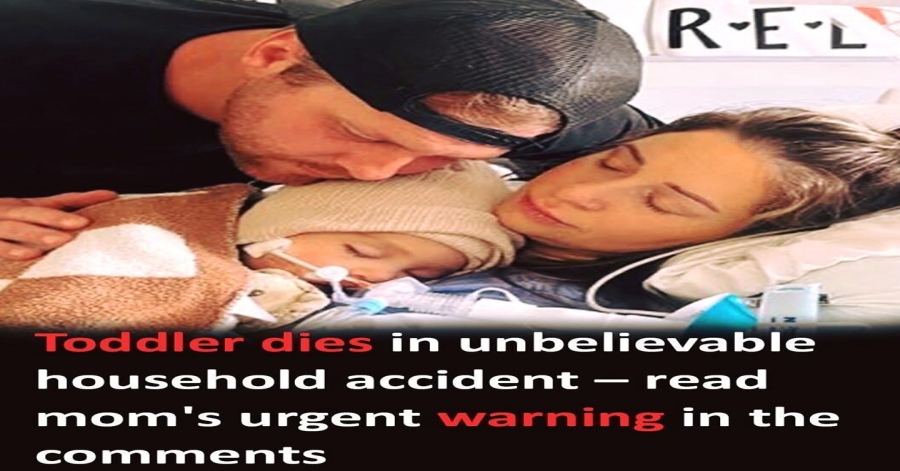
Lindsay Dewey never imagined she would one day share the most painful moment of her life. After the sudden death of her 22-month-old son, Reed, in a household accident, she made the difficult decision to speak out—hoping to warn other parents about dangers that can exist in any home.
The tragedy unfolded during an otherwise ordinary day. As Lindsay went about her household tasks, her children played nearby. Curious and full of toddler energy, Reed entertained himself with a suction-cup bowl, pressing it against a large mirror and pulling it away in delight.
In a matter of seconds, the heavy mirror detached from the wall and fell on him. Lindsay recalls hearing nothing unusual until the moment it crashed. She rushed to him immediately, but the injuries were already catastrophic. Reed suffered a fractured skull and severe traumatic brain injury. Paramedics arrived quickly, but despite their best efforts, he could not be saved. The family was left reeling from a loss that defied comprehension.
The mirror had not been secured to the wall. Because of its size and weight, Lindsay and her husband—a firefighter—believed it was stable and unlikely to tip. An accent chair that usually blocked access to the mirror had recently been moved, unintentionally allowing Reed to reach it.
After Lindsay shared her story online, responses poured in. While some offered criticism and questioned her supervision, many more expressed compassion for her devastating loss. Through it all, Lindsay has remained focused on a single goal: preventing another family from experiencing the same heartbreak.
According to the U.S. Consumer Product Safety Commission, thousands of children are injured each year in furniture and television tip-over incidents. Through the agency’s Anchor It! campaign, parents are urged to secure heavy items like mirrors, dressers, and TVs. By telling Reed’s story, Lindsay hopes to raise awareness—and help keep other children safe.