In a world that often races toward success, wealth, and recognition, it is easy to overlook the quiet souls sitting on life’s sidelines. The story of the old woman on Maple Street is a powerful reminder that our shared humanity is measured not by grand achievements, but by small, consistent acts of kindness—particularly toward those who have nothing to offer in return. It challenges us to reconsider what it means to be a neighbor, to be family, and, above all, to be human. The lesson is both simple and profound: kindness, even when it goes unseen, holds the power to restore dignity, spark connection, and leave a lasting impact. Compassion does not require an audience—only a willing heart.
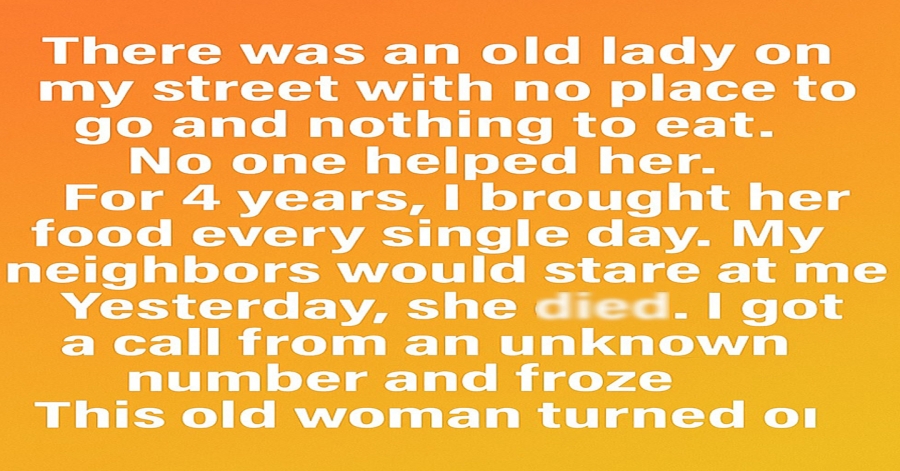
On Maple Street lived an old woman who had become invisible to most—a forgotten soul tucked away in the margins of daily life. She had no family nearby, no friends to rely on, and no place that truly felt like home. Each day, she sat quietly on the curb, her eyes reflecting both the weight of her years and the emptiness of her plate. People passed by—some with pity, others with indifference—but no one ever stopped.
No one, except one neighbor.
That neighbor led an ordinary life, but something about the woman’s solitude moved them. They began bringing her food: first leftovers, then warm meals prepared especially for her. For four years, without fail, a plate was delivered each day. Neighbors watched with curiosity, sometimes whispering among themselves. To them, the woman was a burden. To the one who stopped, she represented a quiet test of humanity: how we treat those who cannot give us anything in return.
The woman never asked for more than what she received. Yet, in her silence, there was profound gratitude, and in her frailty, an unexpected strength. What began as a simple act of kindness grew into a ritual that nourished the giver as much as the receiver.
Then, one day, the woman passed away. The street felt heavier, emptier—as if the world had lost something sacred without ever noticing.
That evening, a call came from an unknown number. "This is the county office,” a gentle voice said. "We found your number among her belongings. She named you as her emergency contact. She left something for you.”
It turned out the old woman was more than a stranger. In the small box she left behind, there was no money and nothing of material value—only a letter written in a trembling hand:
"To the only one who saw me. You fed me food, but more than that—you fed me dignity. You gave me back my humanity. You gave me a reason to keep living. Thank you for being my family when the world forgot me.”
Tears fell as the letter was folded once more. In that moment, it became clear: kindness is never wasted. Even when others watch without understanding, compassion creates ripples that extend far beyond what we can see.
Though the old woman is gone from Maple Street, her memory endures as a quiet monument—a reminder that saving a life does not always require heroism. Sometimes, it only requires showing up, day after day, with a plate of food and a heart willing to care.