Tattoos have long served as a meaningful medium for self-expression, allowing people to etch their identities, beliefs, and personal journeys onto their skin. While some opt for intricate, elaborate designs, others find profound significance in small, minimalist symbols.
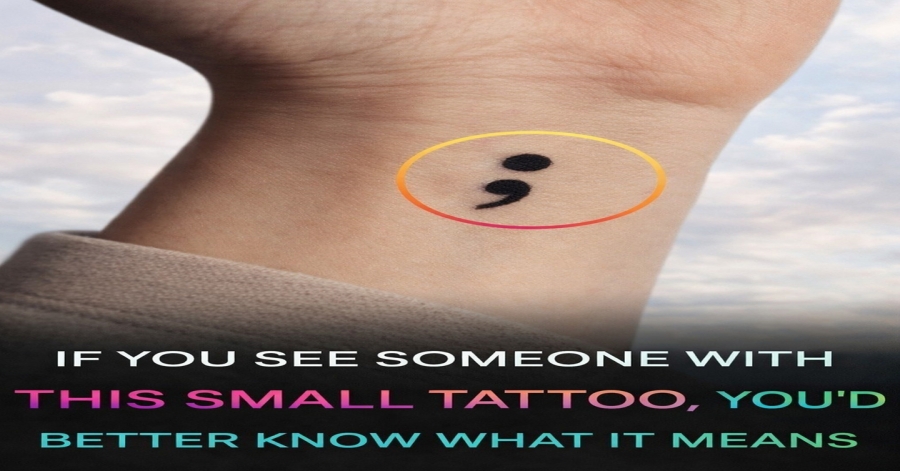
Among these understated marks, the semicolon has emerged as one of the most emotionally resonant images in modern tattoo culture. Though it appears to be a simple punctuation mark, its meaning extends far beyond grammar, carrying a powerful message of survival, resilience, and hope.
The semicolon tattoo gained global recognition in 2013 with the founding of Project Semicolon. This movement was created to raise awareness about mental health and suicide prevention, encouraging open and honest conversations about emotional struggles. By adopting the semicolon as its emblem, the project introduced a metaphor that deeply resonates with many. In literature, a semicolon represents a pause, not an ending. Applied to life, it becomes a symbol of choosing to continue one’s story despite hardship. The message is clear—struggles, no matter how overwhelming, do not have to mark the final chapter.
This powerful metaphor has connected with people across all cultures and backgrounds. For individuals who have faced depression, anxiety, trauma, or suicidal thoughts, the semicolon tattoo serves as a personal declaration of perseverance. It quietly acknowledges battles fought and survived. At the same time, it offers a sense of solidarity with others experiencing similar challenges. Its simplicity is its strength; the symbol does not demand explanation, yet for those who recognize it, its meaning is immediate and profound.
As public figures and advocates have shared their own connections to the symbol, the visibility of the semicolon tattoo has grown significantly. Their openness has helped normalize conversations about mental health, reducing stigma and encouraging broader acceptance and understanding. The widespread embrace of the semicolon reflects a cultural shift toward greater compassion and empathy when discussing emotional well-being.
Ultimately, the semicolon tattoo represents more than just survival—it represents choice. It is the decision to continue, to seek help, and to move forward. It stands as a gentle reminder that difficult chapters are simply part of a larger story, not its conclusion. In its quiet, unassuming form, this small mark carries a powerful truth: resilience is always possible, and every story deserves the chance to continue.