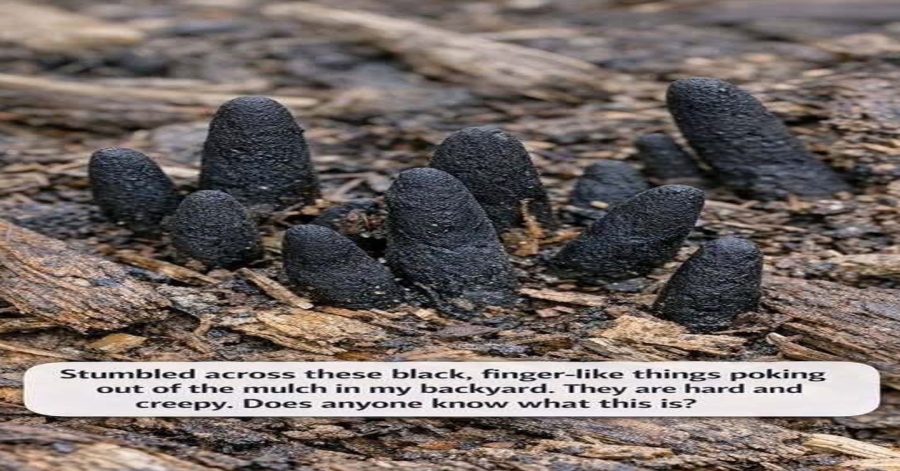
Discovering unusual black, finger-like growths emerging from your mulch or soil can be an unsettling surprise. These intriguing formations are most likely Dead Man's Fingers (*Xylaria polymorpha*), a fungus whose macabre appearance earns its haunting name. Despite their spooky aesthetic, these organisms are completely harmless and actually serve as valuable contributors to your garden's ecosystem.
Dead Man's Fingers typically appear as elongated, dark brown to black protrusions reaching three to four inches in height. Young specimens may start with a pale or bluish tinge before darkening and developing their characteristic woody texture as they mature. These fungi emerge from buried wood, decomposing tree stumps, or mulch beds, favoring shaded, consistently moist areas during their peak growing seasons in spring and fall.
Proper identification involves noting several distinct characteristics: finger-like clustered growth, a smooth yet toughened exterior surface, and a white interior when sliced open. While they may be confused with stinkhorns or decaying plant roots, Dead Man's Fingers can be distinguished by their structured growth pattern and method of spore production.
Gardeners can rest assured that these fungi pose no threat to humans, pets, or living plants. They do not attack healthy vegetation and focus instead on breaking down already dead wood. The fungi are considered inedible due to their tough, woody texture. Removal remains a matter of personal preference—those wishing to eliminate them for aesthetic reasons can simply pull them up along with any underlying decaying wood. To discourage future growth, reduce available decomposing wood, improve drainage in affected areas, or consider switching to alternative mulch materials.
Encountering Dead Man's Fingers presents a fascinating opportunity to explore the hidden world of mycology. These organisms remind us of the vital decomposition processes occurring beneath our feet, enriching soil and completing natural nutrient cycles. For those uncertain about identification or facing extensive growth, consulting local extension services or mycologists provides helpful guidance. Embracing these strange yet beneficial fungi can deepen our appreciation for the complex life cycles operating just below the garden's surface.