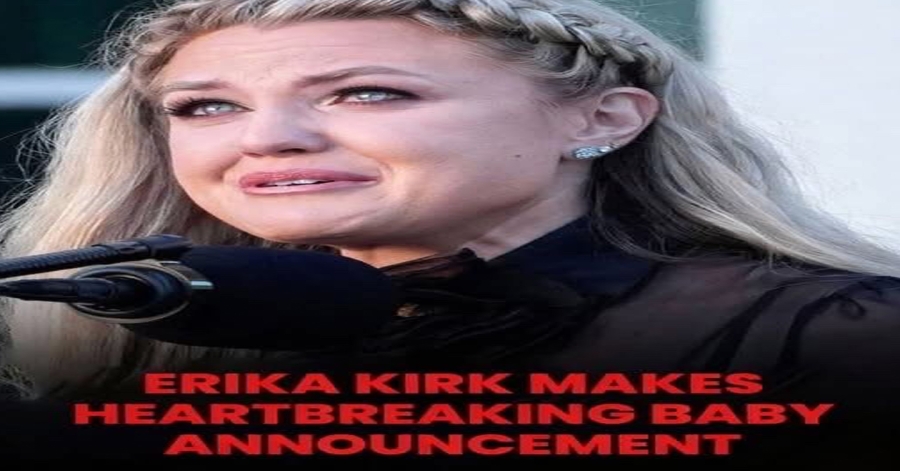
Without fanfare or dramatic buildup, Erika Kirk shared a message that quietly carried immense weight, quickly spreading across social media and drawing attention far beyond typical headlines. What she offered was not political, strategic, or designed for debate—it was deeply personal, and that made all the difference. As the wife of a well-known public figure, she is no stranger to attention, but this moment felt different. There was no distance between her and her readers, only honesty—the kind that resonates because it reflects something many recognize in their own lives.
Her update focused on the emotional reality of becoming a parent or trying to become one—a journey millions understand but few openly discuss. While often described in simple terms like excitement and joy, the truth is far more complex, layered with uncertainty, vulnerability, and moments hard to express. That is why her message resonated. People responded not because of who she is connected to, but because of what she was willing to say. The path to parenthood is rarely straightforward; for many, it includes hidden challenges like waiting, hoping, grieving, and trying again—all while maintaining strength in public.
Erika spoke into that space. Her words reflected quiet struggles—emotional highs and lows that can coexist. She did not present a perfect story; she shared something real, giving others permission to acknowledge their own experiences. For some, the path includes infertility—long cycles of hope followed by disappointment. For others, it includes loss that reshapes how they see time and expectation. Miscarriage and complicated pregnancies leave deep, often invisible marks. Even when the path is more expected, pregnancy and postpartum life can bring overwhelming physical and emotional shifts, especially under the pressure of public life.
The response was immediate and powerful. Comments poured in from people of many backgrounds, some sharing their stories for the first time—years of trying, heartbreak after loss, and the quiet strength to keep going. Others offered encouragement and support, forming a collective voice that echoed: you are not alone. What stood out was the tone: less division, more connection. People who might disagree on almost everything else found common ground here, because building a family—or struggling to do so—is deeply human.
Erika’s message reminded us that behind public identities and headlines are personal stories filled with waiting, hoping, worrying, and holding on to belief. It also highlighted how rarely these conversations happen openly. When someone speaks honestly, it creates space for others, shifting experience from isolation to connection. Her update was not about offering solutions but acknowledging a journey as it is—and that honesty is powerful. Choosing to share while living in the public eye takes courage, and in this case, that choice created something meaningful: a moment where thousands paused not to argue, but to reflect and connect.
The conversation that followed became part of a broader recognition that reproductive health, pregnancy, postpartum challenges, and fertility struggles deserve more openness. These are not rare experiences—they are part of many lives, yet often treated as private burdens. What Erika shared helped shift that perspective. There is no single version of this path. Some experience joy quickly; others face obstacles that test patience and resilience. What connects people is emotional investment—the willingness to keep going, even when the outcome is uncertain. That is what people responded to: not a perfect story, but a real one still unfolding. And in that unfolding, there is power—because even in uncertainty, there can be connection, and even in vulnerability, there can be strength.