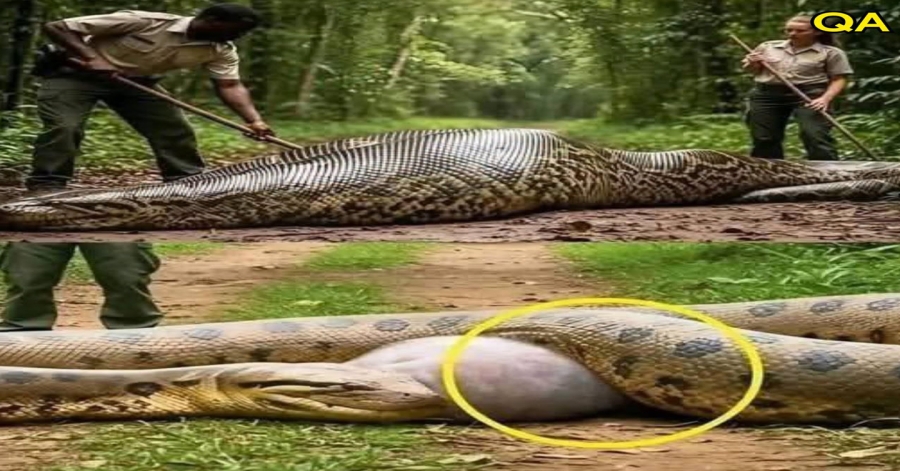
In a rare and eye-opening wildlife intervention, park rangers in a South American wetland successfully rescued a distressed Green Anaconda after it swallowed a dangerous foreign object—a stark reminder that even the world’s heaviest snakes are not immune to the perils of human pollution.
The Green Anaconda, which can grow up to 9 meters (30 feet) long and weigh over 200 kilograms (440 pounds), is an apex predator native to the swamps and rivers of South America. Though often portrayed as an unstoppable giant, this real-life event revealed a vulnerable side: the snake was found sluggish, weak, and unable to move normally. Suspecting an internal blockage, the rangers acted swiftly. Using specialized equipment, they safely restrained the massive reptile, extracted the indigestible object with expert precision, and closely monitored its recovery before releasing it back into the wild.
This incident highlights a growing crisis—wildlife increasingly encounters plastic, fishing gear, and other debris that can cause internal blockages, infections, organ damage, or starvation. Unlike natural prey, these synthetic items are unrecognizable as threats to animals, making pollution particularly deadly. For the anaconda, which plays a vital ecological role by controlling prey populations and maintaining biodiversity, such human-induced dangers can be catastrophic.
The rescue's success underscores the critical importance of trained park rangers and conservationists, who serve as the first line of defense for imperiled ecosystems. Their work—monitoring wildlife, responding to emergencies, and educating the public—makes life-saving interventions possible.
This story carries a powerful message: even the mightiest creatures depend on healthy environments, and human carelessness can have devastating consequences. Yet it also offers hope—through awareness, responsibility, and dedicated action, we can protect these incredible species. Simple steps like reducing plastic use, avoiding littering, supporting conservation groups, and respecting natural habitats can collectively make a profound difference. The anaconda’s survival is not just a triumph for one snake, but a testament to the delicate balance of nature and our shared duty to preserve it.