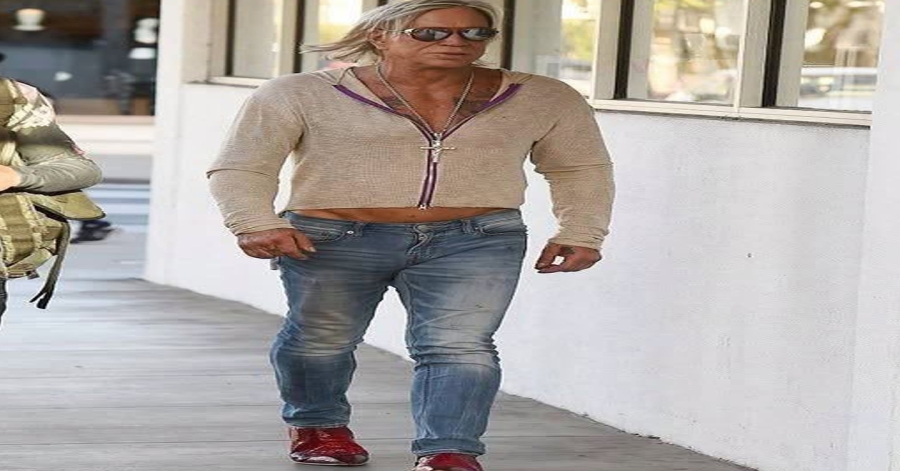
Beverly Hills pedestrians recently paused for a double take when Mickey Rourke stepped out alongside celebrity hairstylist Giuseppe Franco. Their bold, theatrical appearance drew lighthearted comparisons to the exaggerated fashion world satirized in Zoolander—less a deliberate imitation than a reminder of how fashion, parody, and self-expression blur in public life.
Rourke's look was unmistakably his own: bleached, tousled hair; a partially unzipped top; jeans; vivid red shoes; and a large crucifix against his chest. Franco complemented him in a sharp black ensemble with carefully sculpted hair, adding a contrasting precision to the scene.
Rather than reading as costume, the moment felt like performance—two figures comfortable being noticed, unbothered by interpretation. Rourke, who rose to prominence in the 1980s through roles emphasizing intensity and vulnerability, has never been known for understatement.
That defiance is shaped by experience. Rourke has spoken openly about the toll his brief but physically punishing return to professional boxing took on his face and health. Multiple reconstructive surgeries followed injuries sustained in the ring, and he has never attempted to soften that history, folding it instead into his public identity.
His boxing record from the early 1990s—marked by several wins and draws—was modest but demanding, and his later exhibition bouts drew both attention and controversy. Still, the throughline in Rourke's life has been resilience rather than retreat.
The recent outing with Franco was notable not because it echoed a cult comedy, but because it highlighted something enduring: fashion and self-presentation are tools of expression, not conformity. For Rourke, style is less about trend and more about autonomy—a reminder that some Hollywood figures are less interested in blending in than in remaining unmistakably themselves.