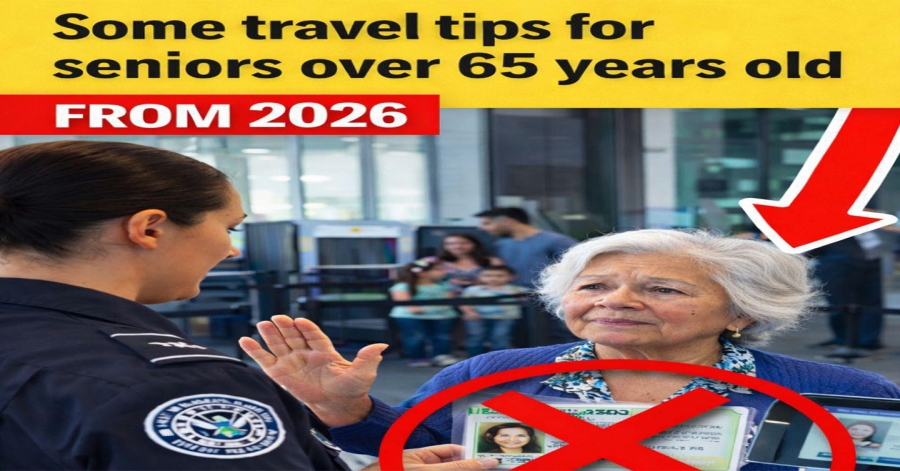
Traveling after 65 should be a journey of enjoyment, not endurance. While airports can feel overwhelming, a series of updated rules now empower senior travelers with rights to priority, comfort, and protection. The challenge is that these benefits are rarely explained, leaving many to navigate crowds, confusion, and stress unnecessarily.
This guide outlines the key provisions and how to access them, ensuring your next trip is marked by dignity and ease.
### Your Essential Travel Rights & How to Use Them
**1. The Right to Stay With Your Companion**
You should not have to navigate the airport alone. Current accessibility policies allow a travel companion—a spouse, adult child, or friend—to accompany you through security, waiting areas, and boarding, even on separately booked tickets.
* **How to request it:** At check-in or the gate, ask staff to link your reservations under "mobility assistance" to prevent separation.
**2. Priority Boarding for Mobility or Health Needs**
Joint pain, arthritis, fatigue, balance issues, or reduced stamina qualify you for assisted boarding. You do not need a wheelchair or to disclose medical details.
* **How to request it:** Ask for an "assistance note" on your boarding pass. This allows you to board early, store luggage calmly, and be seated without rushing.
**3. Access to Calm, Dedicated Lounges**
Many airports now offer accessibility lounges with quieter environments, comfortable seating, and dedicated staff. If you qualify for assisted boarding, access is often granted at no extra cost.
**4. Simplified Security for Medical Items**
Medications, liquids, CPAP machines, and medical devices no longer need to be removed from your bag for screening (supported by TSA guidelines and expanding internationally), avoiding public exposure and delays.
**5. A Free Extra Bag for Medical Necessities**
You may carry an additional bag for medical items like insulin, CPAP equipment, or blood-pressure monitors without it counting toward your carry-on allowance or incurring fees.
**6. In-Cabin Refrigeration for Medications**
Flight crews can store temperature-sensitive medications (like insulin or certain prescriptions) in onboard refrigerated compartments upon request.
**7. Accessible Seating at No Extra Charge**
If you need an aisle seat, extra legroom, or proximity to the restroom for health reasons, airlines must provide it free of charge when available. A medical certificate is typically not required.
**8. Keep Essential Health Devices With You**
Mobility aids, CPAP machines, portable oxygen, and orthopedic cushions must travel in the cabin with you; airlines cannot force you to check them.
**9. Always Confirm Assistance at the Gate**
Even if requested during booking, confirm assistance at the gate. This activates internal protocols to ensure staff support through boarding and upon arrival.
**10. Ask About Unadvertised Fee Waivers**
Many airlines offer senior discounts or waivers for ticket changes, phone bookings, or flight adjustments, but they are usually only applied upon request.
### Practical Tips for a Smoother Journey
* Arrive early to reduce time pressure.
* Keep medications and documents well-organized and accessible.
* Ask for help calmly and confidently—you are entitled to it.
* If a right is refused, politely request to speak with a supervisor.
Traveling later in life no longer means resigning yourself to exhaustion and stress. These rules exist to ensure your safety, comfort, and peace of mind. The difference between a difficult trip and a dignified one is not luck—it’s knowing what to ask for. Once you understand the system, the journey begins to work for you, not against you.