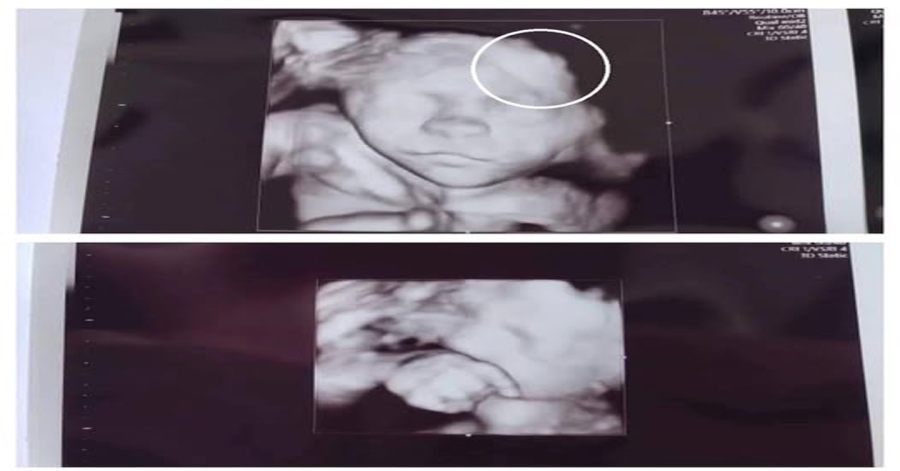
The room fell into an abrupt and chilling stillness. What should have been a tender moment—a first glimpse of new life—was swallowed by a thick, suffocating silence as the technician stared without blinking at the ultrasound screen. A mother clutched her pregnant daughter’s hand, her body tensing against the unknown. Staff exchanged brief, careful glances. Something was visible beside the baby. Something that seemed out of place.
When the technician finally spoke, her voice was calm but deliberate. She mentioned only that the image revealed "something unusual” that required further review. In that suspended moment, the mother’s thoughts spiraled through every worst-case scenario she had ever heard, while her daughter lay motionless, desperately searching the faces around her for clues.
What should have been minutes felt like hours as more images were captured, each new angle tightening the knot of fear in the small, darkened room.
Then the doctor returned. And in an instant, the tension broke. The unfamiliar shape was not a tumor, not a twin, and not a deformity. It was simply a benign artifact—a trick of positioning and light on the monitor. Nothing more. The baby was perfectly healthy.
Tears once heavy with terror dissolved into shaky, breathless laughter as relief flooded through them. In the days that followed, they would often reflect on how the clinic’s honesty and steady presence had guided them through that terrifying stretch of uncertainty. What could have been a moment of lasting trauma instead became something else—a deeper trust in the fragile, miraculous ordinariness of life.