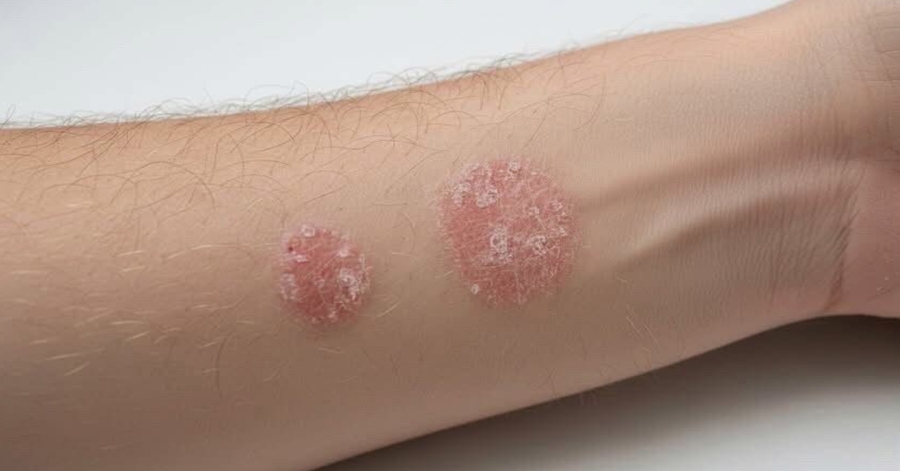
There are several distinct types of psoriasis, each with its own appearance and characteristics. The most common form is **plaque psoriasis**, which presents as raised, red patches covered with silvery-white scales, typically found on the scalp, knees, and elbows.
**Guttate psoriasis** appears as small, pink, drop-shaped spots, often emerging on the torso, arms, and legs. **Pustular psoriasis** is characterized by red, inflamed skin accompanied by white pus-filled blisters, which may be limited to areas like the hands and feet or cover larger portions of the body. **Inverse psoriasis** develops in skin folds such as the armpits, groin, and under the breasts, appearing as smooth, shiny, red lesions. Finally, **erythrodermic psoriasis** is a rare and severe form that resembles a widespread sunburn, causing intense redness, peeling, fever, and systemic illness—this type requires immediate medical attention as it is considered a medical emergency.
**Is Psoriasis Contagious?**
No, psoriasis is absolutely not contagious. It cannot be transmitted through physical contact, such as touching, hugging, or sharing personal items. Psoriasis is an autoimmune condition rooted in genetics and immune system function, not an infection caused by bacteria or viruses.