The familiar comforts of modern travel—a five-star review, polished photos, a platform like Airbnb promising "verified" safety—can create a false sense of security. For many, especially seasoned travelers, these are the reassuring signs of a good choice. But what happens when that trust is shattered?
This isn't just a story about a hidden camera; it's a cautionary tale about the fragility of digital trust in the age of vacation rentals, a vital wake-up call for all travelers, especially those who may be less familiar with modern surveillance.
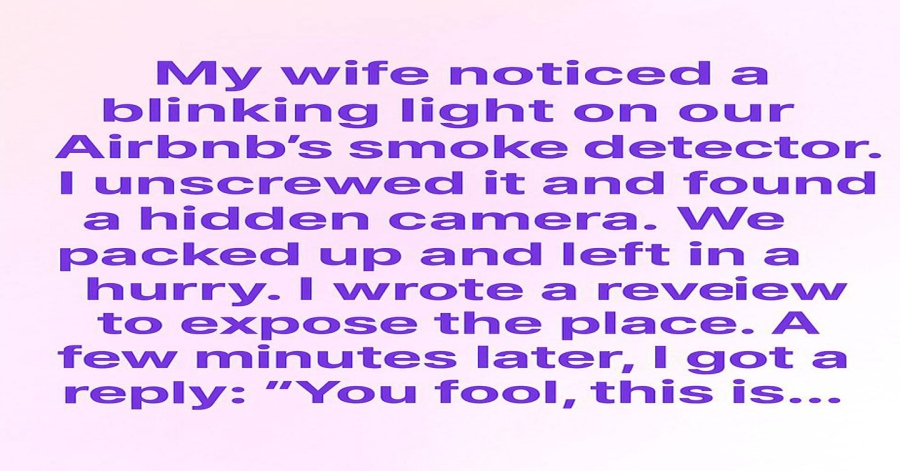
Our ordeal began with excitement. My wife and I arrived at a charming, well-reviewed Airbnb for a weekend getaway. But as we unpacked, she noticed an odd, blinking light on the smoke detector. Dismissing it as a battery signal at first, her concern prompted me to investigate. I climbed up, unscrewed the cover, and found a small, gleaming lens staring back. A hidden camera.
Our relaxation turned to panic. We threw our belongings into our suitcases and fled, the "home" now feeling like a trap. We stopped at a diner miles away, and I immediately wrote a furious review to warn others. The host’s response was instantaneous and chilling: "You fool. That wasn’t a camera. That was the transmitter for our private security system. Now you’ve broken it — and they’ll come looking for it."
"They”? That single word filled me with dread. Scrolling through my photo evidence, I noticed a new horror: a faint red dot reflected on a curtain, unmistakably from a laser. It became clear this was no simple case of a voyeuristic host. The property wasn’t a real vacation rental; it was a front, and the glowing reviews and staged photos were part of an elaborate illusion. We were unwitting pawns in something far more sinister.
We drove through the night to a distant city. To break any potential digital trail, I destroyed the prepaid phone I had used to make the booking. The next day, I filed a police report, though I doubted its efficacy against such a carefully orchestrated scheme.
Lying awake that final night, a hard truth settled in. We can no longer rely solely on platforms, reviews, or photos for our safety. True security begins with personal vigilance. For older travelers, this means taking proactive steps: carefully inspecting rooms upon arrival, using a smartphone flashlight to scan for lens reflections, trusting your instincts if something feels amiss, using a personal mobile hotspot, and never hesitating to leave and report a suspicious situation.
Our experience was a brutal lesson. Not every welcoming wall is built to keep you safe; sometimes, it’s a disguise. And sometimes, a blinking light isn't a harmless indicator—it's a warning.