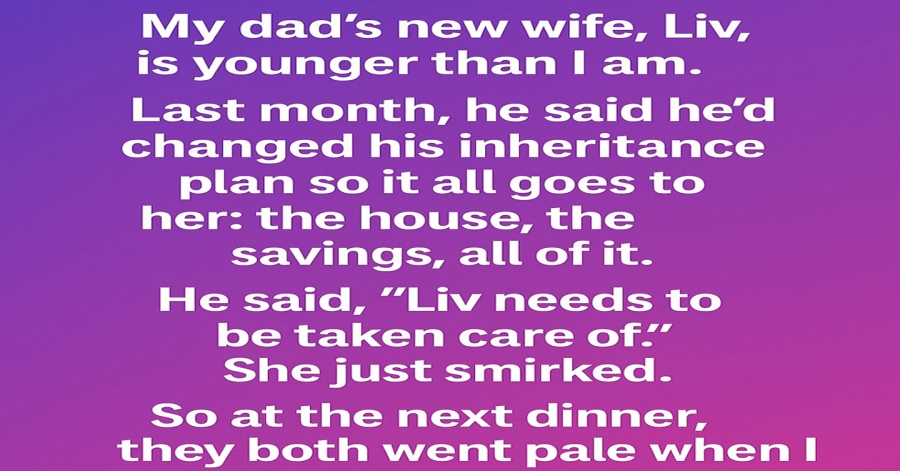
The revelation that my father's new wife, Liv, was younger than me cast an initial pall of awkwardness over our relationship. I worked to be polite and open-minded, yet a subtle discomfort lingered in every interaction.
That tension crystallized last month when my father gently informed me he had rewritten his will, leaving everything to her. "Liv needs to be looked after," he explained. But it was her faint, accompanying smirk that haunted me.
While I didn't care about the money, I was deeply wounded by the feeling of being systematically edged out of my own family. I decided I couldn't let the silence fester.
At our next family dinner, I gathered my courage and calmly asked my father if he had considered my needs in his new plans. The question hung in the air, stunning them both. The smirk vanished from Liv's face, replaced by quiet attention.
My father hesitated, truly confronted for the first time with the unintended hurt his decision had caused. He admitted he never wanted to make me feel insignificant and expressed a sincere desire to make things right.
In a turning point, Liv’s demeanor softened, and she confessed she never meant to come between us. The evening’s tone transformed from strained to sincere, a genuine connection we hadn't felt in years.
I came to a crucial understanding: the conflict was never about an inheritance. It was a struggle to feel seen, valued, and secure in my father's life. He promised to revise his plans with more consideration for everyone, and Liv offered to build a real relationship with me.
This experience taught me that families aren't broken by change, but by the unspoken hurts that accumulate in its wake. And sometimes, a single, honest conversation is all it takes to begin healing the rift.