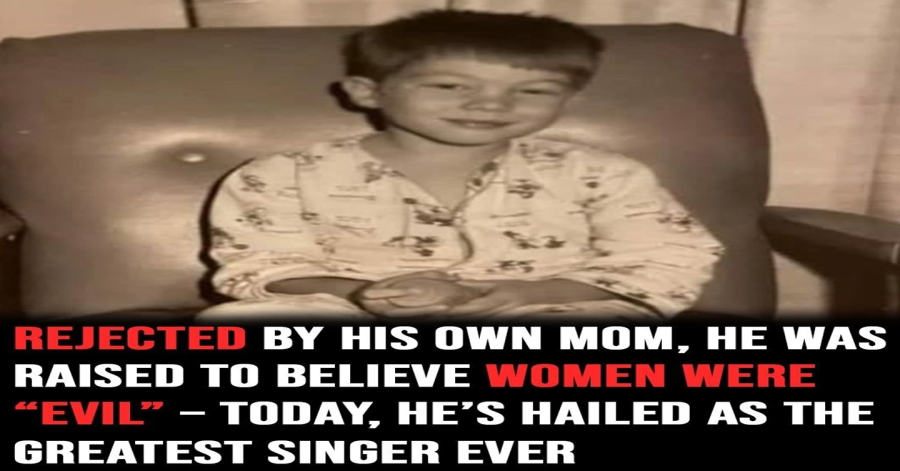
Born William Bruce Rose in Lafayette, Indiana, Axl Rose’s journey to rock stardom was forged in a childhood marked by trauma, instability, and a desperate search for escape.
**A Traumatic Foundation**
His mother, Constance, was 16 when he was born. His biological father, a "troubled and charismatic local delinquent,” allegedly abducted and abused the two-year-old Axl before vanishing. The man was later murdered in 1984, and Axl never reconnected with him. After his mother remarried Stephen L. Bailey, Axl’s life became one of strict Pentecostal rule. He described an oppressive home where television was deemed "Satanic,” and where he felt both emotionally and physically abused by his stepfather—once being struck for singing along to a Barry Manilow song on the radio.
He also harbored deep resentment toward his mother, believing she failed to protect him. "She picked my stepfather over me,” he told *Rolling Stone*. "She watched me get beaten by him... She wasn’t there for me.” School provided little refuge; he was bullied relentlessly, developing a defensive, tough exterior by eighth grade.
**Music as Sanctuary and Rebellion**
Music became his only haven. Singing in the church choir from age five and performing in a family trio, he was noted by teachers as intelligent, charismatic, and a natural leader. At 17, after learning the truth about his origins, he violently rejected his upbringing. This rebellion led to over 20 arrests. Facing habitual offender charges, he fled to Los Angeles in December 1982 to pursue music.
In L.A., he adopted the stage name "Axl Rose,” legally incorporating his biological father’s surname. By 1985, he merged bands with guitarist Izzy Stradlin, forming the core of what would become Guns N’ Roses. The classic lineup—Rose, Slash, Izzy, Duff McKagan, and Steven Adler—soon crystallized.
**Explosive Fame and Lasting Legacy**
Their 1987 debut, *Appetite for Destruction*, ignited slowly before becoming a global phenomenon, driven by relentless touring and the anthem "Sweet Child o’ Mine.” It is now the best-selling debut album in U.S. history. Rose’s explosive, wide-ranging voice and volatile, magnetic stage presence made him an icon.
Fame amplified the chaos. The 1990s were defined by lineup changes, riots (like the infamous 1991 St. Louis incident), lawsuits, and his own diagnosed bipolar disorder. Through therapy, he confronted the destructive patterns born from his youth. "I was told that my mental circuitry was all twisted,” he explained.
His personal life, particularly a turbulent, short-lived marriage to Erin Everly in 1990, was often channeled into his raw songwriting. Despite the turmoil, his perfectionism and relentless drive eventually led to a historic reunion of Guns N’ Roses, commanding stadiums worldwide.
**An Enduring Icon**
Inducted into the Rock and Roll Hall of Fame in 2012 (though he declined to attend), Axl Rose’s legacy is one of extraordinary resilience. He transformed a childhood of pain and rejection into a powerful, singular artistic force, proving that the darkest beginnings can fuel a star that burns, brilliantly and unpredictably, for decades.