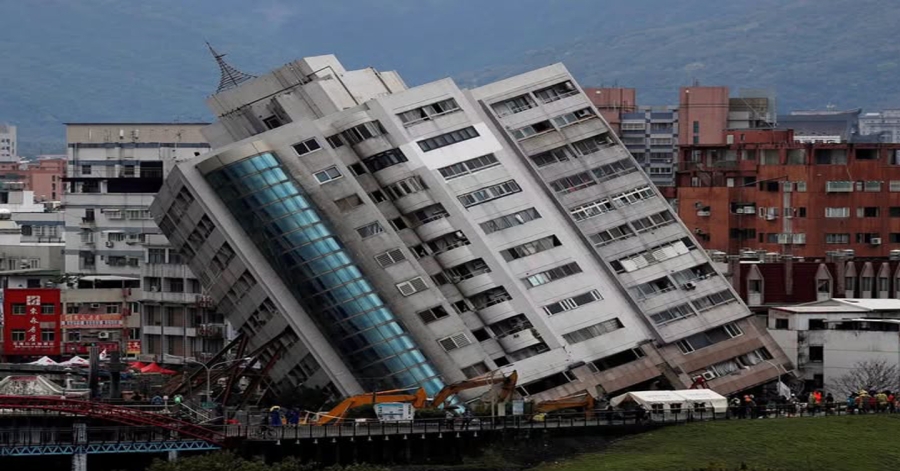
On March 28, 2025, a catastrophic 7.7-magnitude earthquake struck Southeast Asia, fundamentally altering the lives of millions in a matter of seconds. Centered along Myanmar’s volatile Sagaing Fault, the shallow tremor unleashed an energy release comparable to hundreds of nuclear explosions. It tore through the heart of Myanmar and reverberated over a thousand miles away, collapsing modern high-rises in Thailand and shattering ancient architecture. This is the true story of that day—told through the eyes of those who lived through the terror and the desperate survival that followed.
On March 28, 2025, a catastrophic 7.7-magnitude earthquake struck Southeast Asia, fundamentally altering the lives of millions in a matter of seconds. Centered along Myanmar’s volatile Sagaing Fault, the shallow tremor unleashed an energy release comparable to hundreds of nuclear explosions. It tore through the heart of Myanmar and reverberated over a thousand miles away, collapsing modern high-rises in Thailand and shattering ancient architecture. This is the true story of that day—told through the eyes of those who lived through the terror and the desperate survival that followed.
The Rupture in Mandalay
At exactly 12:50 p.m., the ground beneath Sagaing and Myanmar’s second-largest city, Mandalay, violently fractured. In an instant, a rare "super-shear" supersonic rupture traveled through the crust, generating extreme shaking that reached a maximum Modified Mercalli intensity of X.
For the monks at the historic Ma Soe Yane monastery, a typical afternoon of prayer was replaced by a deafening roar. As the earth heaved, the heavy concrete and timber walls collapsed inward. Across the city, sections of Mandalay’s ancient Royal Palace crumbled into dust. The nearby 90-year-old Sagaing Bridge buckled and severed completely, dropping steel and concrete into the churning waters below.
The initial 7.7 shock was followed just twelve minutes later by a violent 6.4-magnitude aftershock, catching survivors as they tried to flee their homes and trapping rescue workers who were already digging through the debris with their bare hands. In total, the disaster claimed over 3,600 lives in Myanmar alone, overwhelming localized hospitals and leaving entire river floodplain communities devastated by liquefaction.
Terror in Bangkok's High-Rises
Nearly 600 miles to the south, the citizens of Bangkok, Thailand, believed they were far out of harm's way. But the city's soft, gel-like soil acted as a natural amplifier for the seismic waves rolling down from Myanmar. Suddenly, skyscrapers began to sway like pendulums, prompting thousands of panicked office workers to stream into the streets.
The worst of the tragedy in Thailand occurred at a busy downtown construction site. A massive 30-story skyscraper under construction utilized a vulnerable "flat slab" architecture, leaving it defenseless against the rolling lateral energy. With a sickening crunch of twisting rebar, the entire upper structure pancaked downward.
Dozens of construction workers were trapped instantly within the tangled mountain of gray concrete. Thai emergency search-and-rescue teams worked through the night under floodlights, pulling survivors from microscopic pockets of space within the wreckage. At least 18 people lost their lives across Thailand, and Bangkok was officially declared a disaster-stricken area.
A Region Unites in Grief
The scale of the devastation required an immediate global response. Organizations like Direct Relief mobilized alongside the ASEAN Humanitarian Assistance Center to coordinate emergency medical supply chains. Neighboring nations—including China, India, and Malaysia—bypassed complex political blockades to dispatch heavy rescue machinery, emergency funds, and vital aid to the affected populations.
While the physical scars on cities like Mandalay and Bangkok take years to mend, the story of the 2025 earthquake remains a profound reminder of the earth's unpredictable power and the enduring resilience of the communities that stand together in its wake.