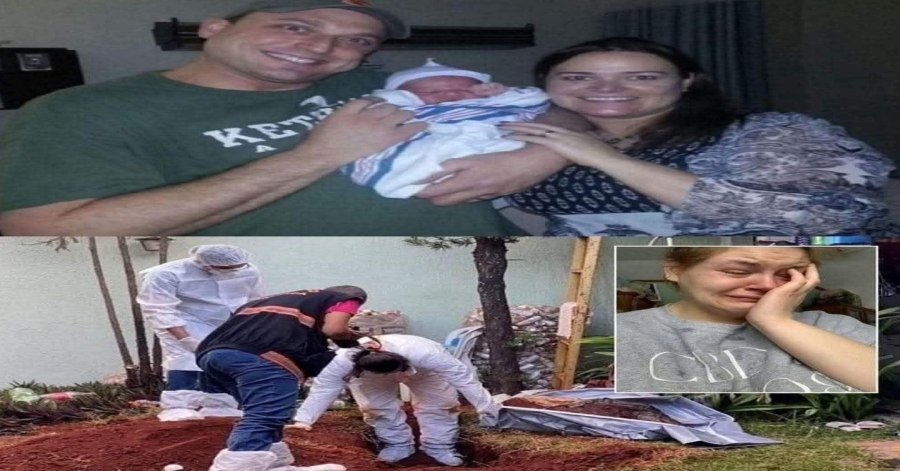
For most new parents, the drive home from the hospital is filled with silent prayers that the baby stays asleep. For Mark and Teresa Landon, the drive home from the adoption agency last Tuesday was filled with one overwhelming worry: *Would he eat?*
After three years on a waiting list and two failed placements, the couple finally brought home 4-day-old Leo. But what happened when they walked through their front door wasn’t just feeding a baby—it was, according to the couple, a "small miracle” that erased years of doubt.
"He latched onto the bottle like he had been waiting for us his whole life,” Teresa, 34, told local reporters. "But that wasn’t the shocking part. The shocking part was *where* he ate.”
The couple’s home video, which has since gone viral with over 2 million views, shows the exhausted parents placing the car seat on the living room rug. As Mark unbuckles the infant, Leo’s eyes pop open. Mark, a high school coach, jokes to the camera, "Bet you five bucks he’s hungry.”
He was right.
But instead of warming the bottle in the kitchen, Mark sat down on the floor, cross-legged, right next to the adoption paperwork still spread across the coffee table. He propped Leo in the crook of his arm, offered the nipple of a 2-ounce ready-to-feed formula bottle, and the baby immediately began to suckle.
"He ate the entire bottle in four minutes,” Mark said. "Burped like a truck driver. And then fell asleep with his little hand wrapped around my thumb.”
The detail that has stunned viewers, however, isn’t the speed of the feeding—it’s that the baby *had to eat* the moment they arrived. According to Teresa, the agency had warned them that Leo had been "a lazy feeder” in the hospital nursery, losing 7% of his birth weight.
"They told us it might take two or three hours to get him to take even half an ounce,” Teresa said. "We had a feeding tube kit in the diaper bag, just in case. We never opened it.”
Pediatricians confirm that while some adopted newborns experience transitional feeding difficulties due to the stress of changing environments, it is biologically true that a newborn must eat within 3-4 hours of a previous feeding to maintain blood sugar levels.
"This baby was essentially saying, ‘I’m home, I’m safe, now feed me,’” said Dr. Lila Harrow, a neonatologist not involved in the case. "It’s not magic—it’s instinct. But for parents who have fought for years to hold their child, that first successful feed feels like the world stopping.”
The Landons say the moment wasn’t just about hunger—it was about trust.
"For two years, we set a plate for a child who wasn’t there,” Mark said, tearing up. "Last Tuesday, we finally got to fill it. And he ate. He actually ate.”
The couple has since started a blog called "The Clean Plate Club,” documenting Leo’s now-healthy appetite. As of this morning, the baby has gained 11 ounces in six days.
"He’s already outgrowing his newborn onesies,” Teresa laughed. "We couldn’t be happier.”
---
*If you have an adoption story or a verified "first moment at home” you’d like to share, contact your local family services bureau.*