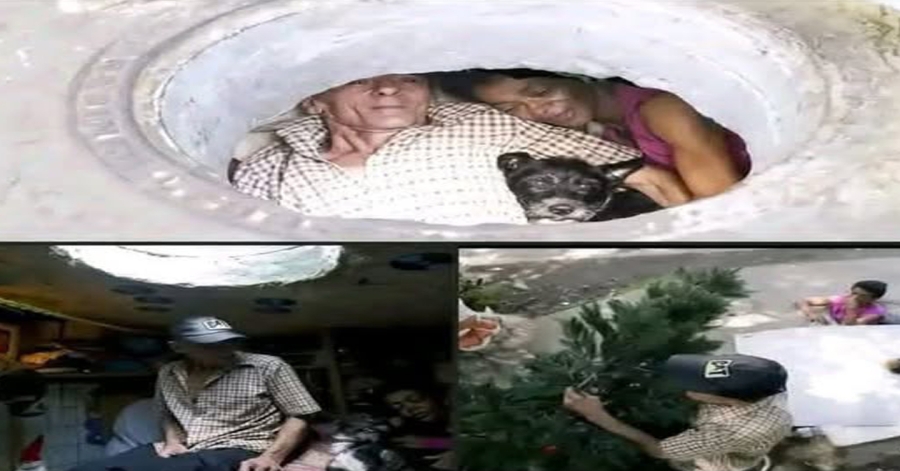
A couple and their dog find shelter for the night inside a concrete drainage pipe, the city humming above them as headlights flash and commuters rush past.
Wind moves through the hollow tunnel, and traffic vibrations travel through the cement overhead. Their mattress and a few neatly arranged belongings line the curved wall. What unfolds here is not just a story of individual hardship—it reflects broader pressures that have quietly reshaped daily life for many.
They didn’t choose the pipe for comfort or concealment. They chose it because, one by one, their options disappeared—rising rent, unexpected medical bills, inconsistent work, and a lack of affordable housing. When traditional safety nets fail, even urban infrastructure can become a makeshift home. In that confined space, they’ve pieced together what stability they can, anchored by daily routine and the companionship of a dog who still greets each morning with trust.
The small details carry meaning. Folded clothes. A blanket tucked carefully at the edges. Shared warmth against cold concrete. These gestures speak to resilience and a desire for dignity, even under difficult circumstances. They remind us that housing insecurity is not a sign of someone giving up—it is often the result of forces beyond any single household’s control.
Scenes like this are easy to miss as the city moves on. Yet they raise a larger question about affordability, access to care, and the strength of community support systems. Addressing visible hardship requires more than compassion—it calls for thoughtful policy, sustained resources, and a willingness to look closer at the world we share.