# The Cancer-Free Village That Captured Global Attention
At a time when cancer has become a major global health concern and a source of widespread fear, one village in China has drawn significant attention for a remarkable reason: no one in Liephe Village, located in Guangxi Province, has ever developed cancer. The phenomenon even prompted a team of leading medical experts from the
United States to travel to the village for in-depth research.
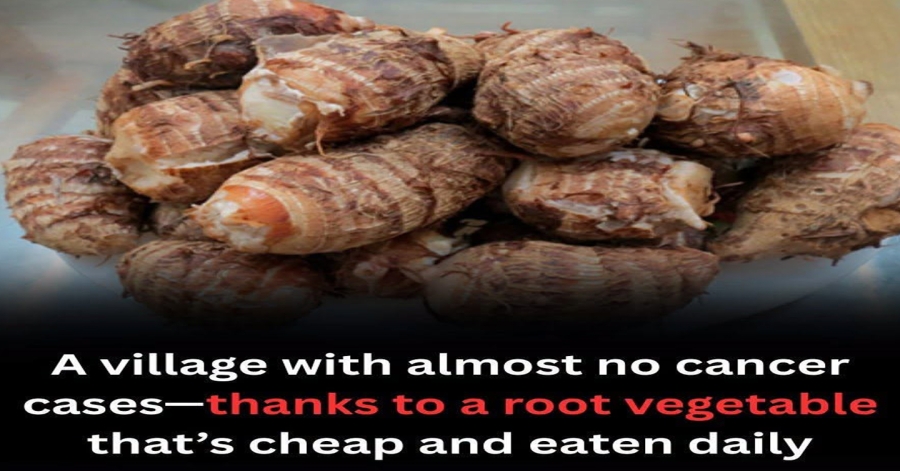
After carefully studying the village's geographical environment, climate, lifestyle, and dietary habits, the researchers reached a conclusion: the absence of cancer in Liephe Village is largely due to the residents' habit of regularly consuming taro root.
## Taro Root: The Staple That May Protect Against Cancer
Taro root is virtually the only agricultural crop suitable for cultivation in Liephe Village, and local residents rely on it as a primary staple food. Previous scientific studies have also shown that taro is highly beneficial in the diets of cancer patients and offers numerous health benefits.
Taro is a very common tuber in Vietnam. Although inexpensive, it possesses exceptionally high nutritional value. It is rich in dietary fiber, which helps stimulate bowel movements and prevent constipation. In addition, it can improve immune function and serves as a nourishing food during recovery after illness.
## Four Major Health Benefits of Taro Root
### 1. Detoxification, Swelling Reduction, and Cancer Prevention
According to Traditional Chinese Medicine (TCM), taro is commonly used as both a medicinal and dietary food to help patients endure long-term battles with cancer—during surgery, post-operative recovery, and extended chemotherapy periods.
Taro contains a type of mucilaginous protein. Once absorbed by the body, this substance can stimulate the production of immune globulins (antibodies), thereby strengthening the immune system. For this reason, TCM believes that taro can detoxify the body, reduce swelling, inhibit cancer cell growth, and is even used to help prevent tumors and lymphatic tuberculosis.
### 2. Regulation of Acid–Base Balance
Studies have shown that up to 85% of cancer patients have an overly acidic body environment. Maintaining a slightly alkaline internal environment may help reduce the risk of cancer.
Taro is an alkaline food, capable of neutralizing excess acidity in the body and restoring acid–base balance. This creates an internal environment that is unfavorable for the growth and spread of cancer cells.
### 3. Strengthening Vital Energy and Supporting Digestion
When peeling fresh taro, people often notice a sticky sap that can cause itching, as it contains mild toxins. However, once processed and consumed, this mucilage can stimulate the production of immune globulins, thereby enhancing immunity. This effect has been documented in Traditional Chinese Medical literature.
In addition, the saponins and trace elements found in taro help replenish micronutrients, stimulate appetite, and improve digestion. Therefore, TCM affirms that taro can nourish the body and regulate vital energy (Qi).
### 4. Protecting Blood Vessels and Preventing Stroke
Taro is especially rich in potassium. Every 100 grams of taro contains approximately 378 mg of potassium, which helps lower the risk of stroke. Experts recommend eating 5–6 taro roots per week, which may reduce the risk of stroke by up to 40%.