

Terramycin® for Fido and Fluffy: Is This Pinkeye Treatment Right for Your Pet?
Here's a truth bomb for you: that over-the-counter eye ointment you're considering might be doing more harm than good. While Terramycin® can be a real lifesaver for certain bacterial eye infections, using it blindly without a vet's diagnosis is like playing medical roulette with your pet's vision. So, before you reach for that tube, let's get the real deal.
For Busy Owners: Terramycin® is an antibiotic ointment used to treat bacterial eye infections in pets. It contains oxytetracycline and polymyxin B. Always consult with your veterinarian before use, as some eye conditions require different treatments.
What Eye Issues Does Terramycin® Treat in Cats and Dogs? Understanding Your Pet's Condition
Terramycin® ophthalmic ointment is a broad-spectrum antibiotic, meaning it combats a wide array of bacterial culprits. This makes it useful for conditions like bacterial conjunctivitis (pink eye), corneal ulcers (those painful open sores on the eye's surface), keratitis (inflammation of the cornea), and blepharitis (inflammation of the eyelids). Think of it as a first-line defense against common bacterial invaders that can wreak havoc on your pet's peepers.
Now, here's the clinical perspective. When bacteria invade the eye, they trigger an inflammatory cascade. The body's immune system rushes to the scene, releasing inflammatory mediators like cytokines and chemokines. These substances, while intended to fight the infection, can also damage the delicate tissues of the eye, leading to swelling, redness, and pain. Terramycin® steps in by directly attacking the bacteria, reducing their numbers and allowing the eye to heal. Oxytetracycline, specifically, inhibits bacterial protein synthesis by binding to the 30S ribosomal subunit, essentially halting the bacteria's ability to grow and multiply. Polymyxin B disrupts the bacterial cell membrane, causing leakage of essential cellular components and ultimately leading to bacterial death.
How Does Terramycin® Actually Work? The Science Behind the Solution
The dynamic duo of oxytetracycline and polymyxin B are the active ingredients in Terramycin®. Oxytetracycline halts bacterial growth by interfering with protein production. Polymyxin B targets and disrupts the bacterial cell membrane. Together, they create a potent defense against a wide range of bacterial infections affecting your pet's eyes.
Let's break down the biological 'why.' Oxytetracycline, a tetracycline antibiotic, works by binding to the 30S ribosomal subunit of bacteria. Ribosomes are essential for protein synthesis, and by interfering with this process, oxytetracycline effectively stops bacteria from producing the proteins they need to survive and replicate. This is a bacteriostatic effect, meaning it inhibits bacterial growth rather than directly killing the bacteria. Polymyxin B, on the other hand, has a different mechanism of action. It is a lipopeptide antibiotic that binds to the bacterial cell membrane, specifically to the lipopolysaccharide (LPS) component found in Gram-negative bacteria. This binding disrupts the integrity of the cell membrane, leading to increased permeability and leakage of intracellular contents, ultimately causing bacterial cell death. This is a bactericidal effect, meaning it directly kills the bacteria.
What's the Right Way to Use Terramycin® for a Dog Eye Infection? Dosage and Application Tips
Administering Terramycin® correctly is mission-critical for it to work its magic. Always follow your veterinarian's instructions or the directions on the label. Generally, you'll apply a small strip (about ¼ inch) of the ointment to the affected eye(s) two to four times a day. But here's the deal: consistency is key. Don't skip doses, and complete the full course of treatment, even if your pet's eye looks better.
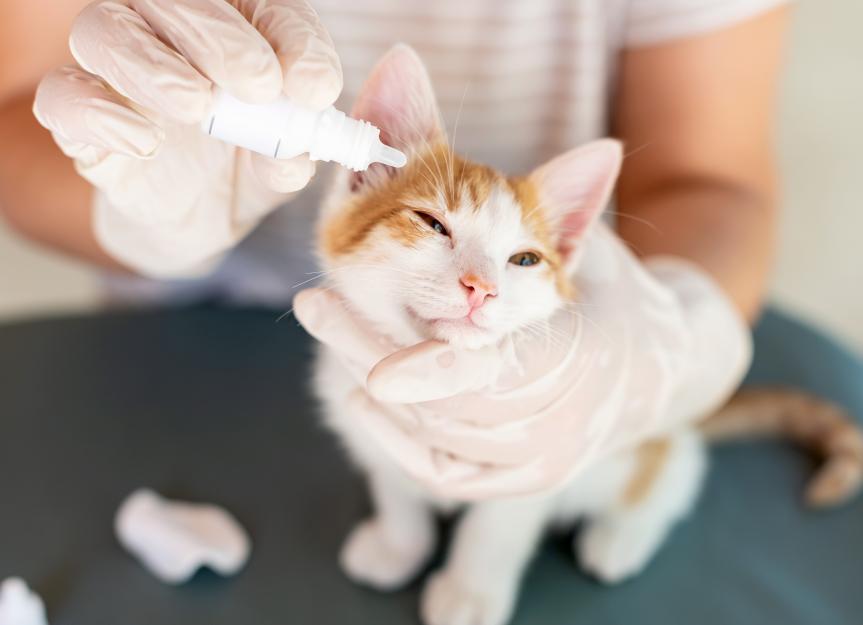
Here are some Home-Care Hacks I tell my clients all the time: First, wash your hands. Seriously, it's non-negotiable. Then, gently clean any discharge around your pet's eye with a warm, damp cloth. To apply the ointment, gently pull down the lower eyelid to create a little pocket and squeeze the ointment into that space. Don't touch the tip of the tube to the eye or any other surface – you don't want to contaminate the ointment. Once you've applied the medication, let your pet blink a few times to distribute it evenly. And if you have multiple pets, make sure to prevent them from grooming each other's eyes, as this can spread infection.
Are There Potential Side Effects of Terramycin® in Dogs and Cats? What to Watch For
Like any medication, Terramycin® can have side effects, although they're usually mild. The most common ones are eye irritation and redness. However, more serious allergic reactions are possible, especially in cats. If you notice swelling of the face, itching, weakness, vomiting, or difficulty breathing, get your pet to the vet ASAP!
From a clinical perspective, the potential for allergic reactions stems from the body's immune response to the antibiotic components. In susceptible animals, the immune system may mistakenly identify oxytetracycline or polymyxin B as a threat, triggering a cascade of events that lead to the release of histamine and other inflammatory mediators. This can result in vasodilation (widening of blood vessels), increased vascular permeability, and bronchoconstriction (narrowing of the airways), leading to the clinical signs of an allergic reaction. In rare cases, these reactions can be life-threatening, hence the need for immediate veterinary attention.
When Is Terramycin® NOT the Right Choice? The Red Flag Checklist
Terramycin® isn't a cure-all, and there are definitely situations where it's not the right choice. If your pet has a deep corneal ulcer, glaucoma, or a foreign object in the eye, Terramycin® alone won't cut it. These conditions require more specialized treatment, and using Terramycin® could actually delay proper care and worsen the problem. Honestly, that's what I tell my own clients in the exam room.
Red Flag Checklist: If your pet's eye is bulging, cloudy, or excessively painful, don't reach for the Terramycin®. If your pet is squinting constantly, rubbing at their eye, or has a sudden change in vision, get them to a vet immediately. And if you've been using Terramycin® for a few days and the eye isn't improving, it's time to reassess the situation with your veterinarian.
Can You Use Human Terramycin® Ointment on Your Pet? Safety and Alternatives
Here's a hard truth: Never use human medications on your pets without consulting a veterinarian. While the active ingredients in human and animal Terramycin® products might be similar, the concentrations and formulations can differ. Using the wrong product could lead to under- or overdosing, as well as other complications. Always stick to medications specifically formulated for animals, and always follow your vet's instructions.
Terramycin® Overdose in Cats and Dogs: What Happens If Your Pet Ingests It?
Overdoses can occur if an animal eats or otherwise consumes Terramycin® ophthalmic ointment. If this occurs, immediately contact your veterinarian or an animal poison control center. Consultation fees often apply.
- Pet Poison Helpline® 855-764-7661
- ASPCA® Animal Poison Control 888-426-4435
How Should Terramycin® Be Stored? Preserving Potency and Safety
Follow these tips when storing your pet’s Terramycin®:
- Store at room temperature between 68–77 degrees F (20–25 degrees C). Brief exposure to temperatures between 59–86 degrees F (15–30 degrees C) are acceptable.
- Keep lid tightly closed when not in use.
- Keep out of reach of children and pets.
- Always confirm storage requirements by reviewing the label.