


Dog X-Rays: What Owners Need to Know About Safety & Cost
Here's a truth bomb most owners don't realize: even a 'routine' X-ray involves low-level radiation exposure that can, theoretically, cause cellular damage. But before you panic, understand that in most cases, the benefits of diagnosis far outweigh the miniscule risk.
Busy Owner Summary: X-rays (radiographs) are vital for veterinary diagnostics, offering a non-invasive peek inside your dog. They help detect everything from broken bones to tumors. While radiation exposure is a concern, the benefits of quick, accurate diagnosis often outweigh the risks, guiding timely treatment.
What Are X-Rays for Dogs and How Do They Work?
X-rays, or radiographs, are a cornerstone of veterinary diagnostics. They let us visualize internal structures, spot diseases, and evaluate organ health. They're a non-invasive tool providing a wealth of information about your dog's condition.
Think of an X-ray as a 2D snapshot of a 3D world. The process involves shooting electromagnetic radiation through your dog's body. This radiation is produced when electrons collide with a metal target inside a specialized tube. Different tissues absorb varying amounts of this radiation.
Here’s the deal: denser tissues, like bone, absorb more radiation, appearing white on the image. Softer tissues, such as the liver or spleen, appear gray because they absorb less energy. Air, with minimal density, absorbs almost nothing, resulting in black areas on the radiograph. This differential absorption creates the image we use for diagnosis.
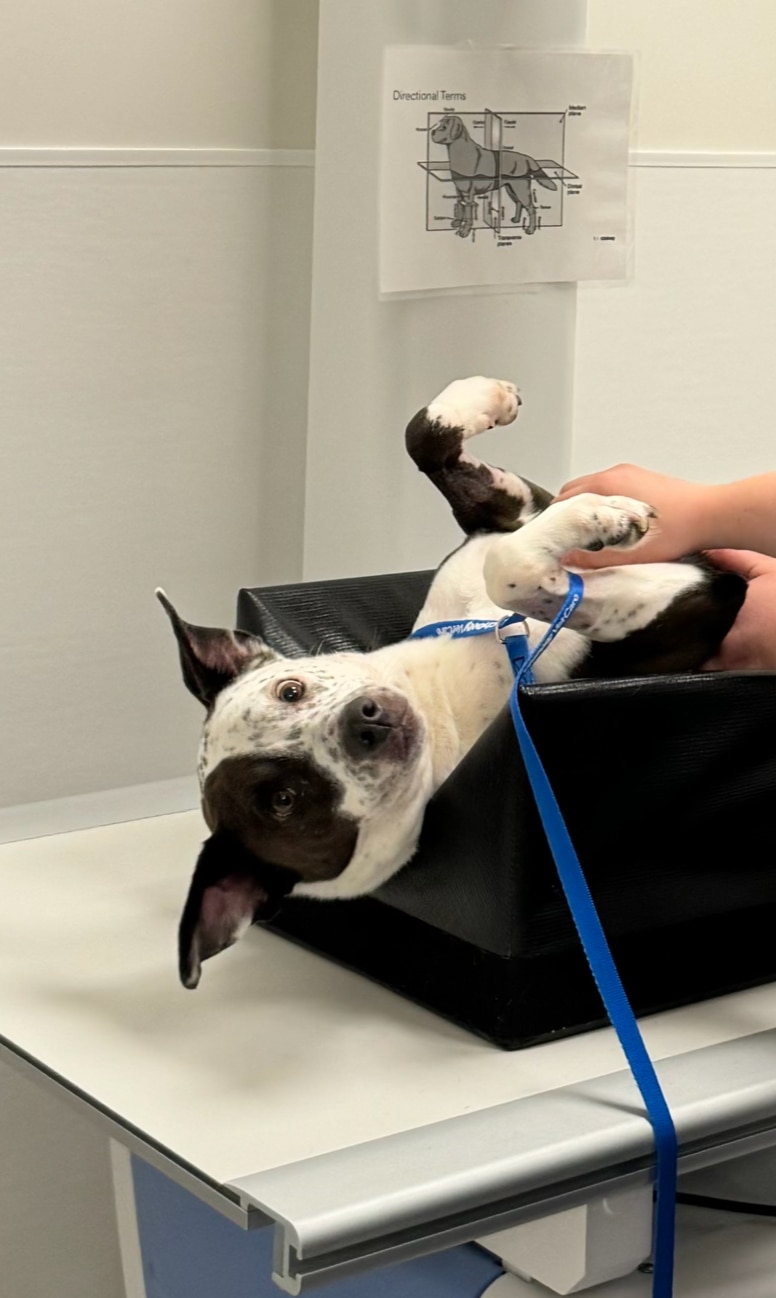
The whole process is typically painless and quick. While there's a small risk of radiation exposure, the benefits usually outweigh the drawbacks. Sedation might be necessary for some dogs to ensure clear images, minimizing the need for retakes and further exposure.
Why Would a Dog Need an X-Ray? Understanding the Indications
X-rays are invaluable for diagnosing a wide range of conditions in dogs. They're often recommended when your vet suspects an underlying health issue that can't be easily identified through a physical exam alone. X-rays help visualize internal problems quickly.
Here’s a list of common reasons why your dog might need an X-ray:
- Trauma (e.g., hit by car, falls)
- Suspected tumors or cancer
- Foreign object ingestion or gastrointestinal obstruction
- Bone fractures
- Heart disease (evaluating heart size and lung changes)
- Respiratory issues like pneumonia, bronchitis, or asthma
- Fluid accumulation in the abdomen or chest
- Bladder stones
- Organ enlargement (e.g., liver, spleen, kidneys)
- Muscle, joint, or ligament injuries; arthritis; hip dysplasia
- Pregnancy confirmation
- Dental diseases
- Pre-surgical planning
For instance, I had a case in the exam room last week where a young Lab kept vomiting. Bloodwork was normal, but the X-ray revealed a corn cob lodged in his small intestine. That image was mission-critical for getting him into surgery ASAP.
What Are the Real Risks of X-Rays for Dogs? Addressing Your Concerns
Radiation exposure is the primary risk associated with X-rays. While the levels are generally low, radiation can cause cellular damage. Minimizing exposure is always a priority, especially considering long-term effects on sensitive tissues.
The main concern stems from the potential for DNA damage. Radiation can induce breaks in DNA strands, leading to mutations. Over time, these mutations can increase the risk of cancer. That's why we use lead shielding and careful technique to minimize the dose.
Here are some strategies to mitigate the risks:
- Sedation: Reduces movement, allowing for fewer retakes and shorter exposure times.
- Proper Shielding: Lead aprons and thyroid shields for staff; careful collimation of the X-ray beam to target only the area of interest.
- Digital Radiography: More sensitive than traditional film, requiring less radiation.
Honestly, the risk is minimal overall. But it's non-negotiable to weigh the risk vs. benefit. Also, errors in interpretation or technical issues can lead to misdiagnosis or the need for repeat X-rays.
What Are the Benefits of X-Rays for Dogs? The Diagnostic Edge
X-rays can often detect issues that other diagnostic tests might miss. They provide a unique view inside your dog's body, offering critical information for accurate diagnosis and treatment. This is extremely helpful for a variety of conditions.
Consider a dog who’s eaten something he shouldn't have. Bloodwork might appear normal, and a physical exam might not reveal much. But an X-ray can clearly show the foreign object lodged in the stomach or intestines, enabling prompt surgical intervention. This kind of direct visualization is something blood tests simply can't provide.
Here's a breakdown of the effectiveness of X-rays:
- Bones and Joints: Excellent for identifying fractures, arthritis, and other skeletal abnormalities.
- Chest: Useful for evaluating the lungs, heart, and major blood vessels. Can detect pneumonia, heart enlargement, and tumors.
- Abdomen: Can visualize foreign bodies, organ enlargement, and fluid accumulation.
Keep in mind that X-rays have limitations. They're not ideal for evaluating soft tissues like ligaments and tendons. In these cases, alternatives like ultrasound or MRI might be necessary.
What is the Cost of X-Rays for Dogs? Budgeting for Veterinary Care
The cost of X-rays for dogs can vary widely, typically ranging from $200 to $500 or more. Several factors influence the final price, including the number of views needed, the use of sedation or anesthesia, and the geographic location of the veterinary clinic.
Some clinics charge based on the body area being X-rayed (e.g., dental vs. abdominal), while others have a flat fee per view. Sedation or general anesthesia will add to the cost, but they can be necessary to obtain clear, diagnostic images, especially in anxious or painful dogs.
Here are some cost-saving tips:
- Pet Insurance: Review your policy. Many pet insurance plans cover a portion of diagnostic X-ray costs.
- Shop Around: Prices can vary between clinics. Call a few local vets to get estimates.
- Consider a Veterinary Teaching Hospital: These facilities often offer lower prices.
Be sure to discuss the estimated cost with your veterinarian upfront. Understanding the breakdown of charges will help you budget for your dog’s care.
How to Prepare Your Dog for X-Rays: A Step-by-Step Guide
Preparing your dog for an X-ray is usually straightforward. Follow your veterinarian's instructions carefully to ensure a smooth and stress-free experience. This will also help in getting the best possible images.
If your vet prescribes a sedative like trazodone or gabapentin, administer it as directed. This can help calm your dog and reduce anxiety during the procedure. You might also be asked to withhold food for a few hours beforehand, especially if sedation is planned.
Here’s what to expect at the clinic:
- Positioning: Your dog will be positioned on their side, back, or belly, depending on the area being X-rayed.
- Restraint: Veterinary staff will gently restrain your dog to keep them still. Sandbags, foam wedges, or tape might be used to help maintain the correct position.
- Duration: The actual X-ray exposure takes only a second, and the entire procedure usually takes just a few minutes.
Stay calm and reassure your dog throughout the process. Your demeanor can significantly impact their anxiety levels.
What Are the Potential Complications of X-Rays for Dogs?
While X-rays are generally safe, complications can occur. Proper positioning is crucial for obtaining diagnostic images, and this can be challenging if your dog is uncooperative or in pain. This can cause discomfort for some dogs.
If your dog struggles during the X-ray, additional images might be needed, increasing radiation exposure. In these cases, sedation is often recommended to minimize stress and ensure clear images. Keep in mind that if limbs must be positioned unnaturally, your dog might experience some soreness afterward, particularly if they have underlying arthritis.
Here's what I tell my own clients: if your dog has pre-existing joint pain, let the vet know *before* the procedure. They can adjust positioning or administer pain relief as needed.
What Are the Alternatives to X-Rays for Dogs? Exploring Other Options
If an X-ray is recommended, your veterinarian has determined it's the best option for diagnosing your dog's condition. However, in some cases, alternative imaging techniques might be considered. These include contrast studies, CT scans, MRI scans, and ultrasound.
Contrast studies involve administering a contrast agent (a special dye) to enhance the visualization of certain structures or conditions. This might be used if a standard X-ray is inconclusive or if there are concerns about obstructions, foreign bodies, or bladder ruptures. However, contrast agents carry their own risks, including allergic reactions and kidney damage, so they're not used lightly.
Here’s a quick comparison of alternatives:
- CT Scans: Provide detailed cross-sectional images of the body. Excellent for evaluating complex anatomical structures. Often require general anesthesia and are more expensive.
- MRI Scans: Use magnetic fields and radio waves to create images. Best for visualizing soft tissues like the brain, spinal cord, and ligaments. Require general anesthesia and are even more costly than CT scans.
- Ultrasound: Uses sound waves to create real-time images. Non-invasive and doesn't require sedation in most cases. Useful for evaluating abdominal organs and heart.
X-Rays for Dogs FAQs
Are X-rays for dogs worth it?
As a cost-effective, non-invasive means to obtain critical diagnostic information, X-rays are most definitely worth it. While radiation is involved, the overall frequency and level of radiation exposure to your dog are typically quite low.
References
Thrall D. (2007). Textbook of Veterinary Diagnostic Radiology. Saunders.